Bybit Card Review: Up to 10% Cashback on Paper, a Locked Gate for Many Readers
The Bybit Card advertises 2% to 10% cashback and no annual fee. We checked the tier rules, the 0.9% conversion fee and the country list, and found the top rate hard to reach and the card closed to US and UK readers.
The verdict
The Bybit Card has no annual fee and a cashback ceiling of 10%, but that rate is tier-gated, capped at $600 a month and not available to US or UK residents. Fees stack up: 0.5% FX and 0.9% crypto conversion in Europe. Sources disagree on whether cashback arrives as points or crypto. Worth a look for active Bybit users in supported regions, not a reason to open a Bybit account.
Best for Active Bybit users in supported regions who can reach higher tiers
Pros
- No annual, monthly or inactivity fee on the card
- Cashback scale runs from 2% at the base tier to 10% at the top, per reviews
- Virtual card is free, and the physical card costs about 5 EUR, GBP or USDT
- ATM withdrawals are free up to 100 per month in the EEA programme
Cons
- Not available in the US or UK, and the supported list has changed over time
- Layers 0.5% FX and 0.9% crypto conversion fees on spending in Europe
- Top cashback tiers need heavy monthly spend or large token holdings
- Custodial: balances sit on Bybit, which suffered a $1.46 billion hack in 2025
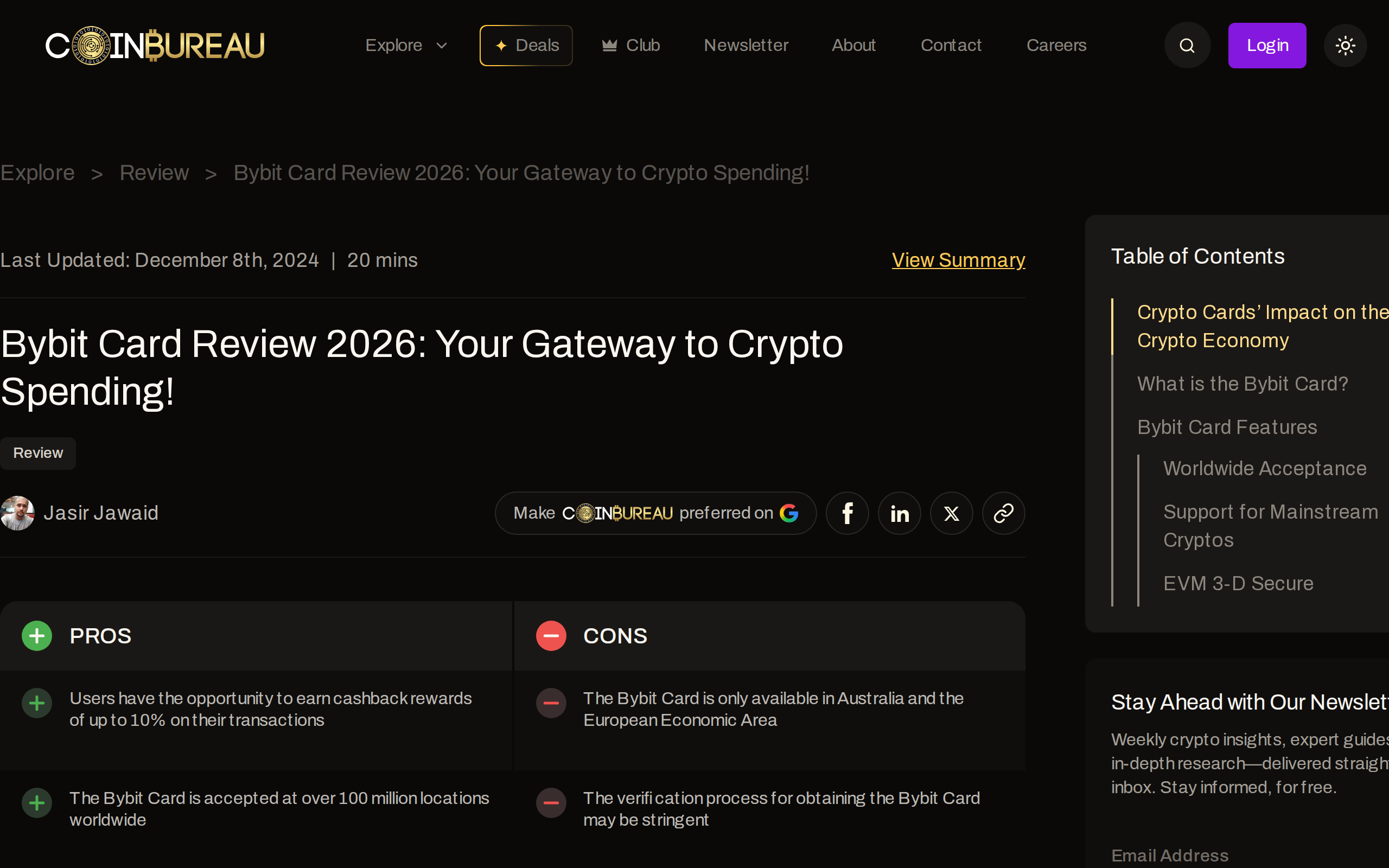
The first thing we learned about the Bybit Card is that you may not be allowed to have one. Bybit's own card page would not open for us: it sent us to the exchange homepage, so every picture here is a capture of a third-party review page. If you live in the United States or the United Kingdom, Coin Bureau lists the card as unavailable, and this review is mostly academic.
The cashback headline, and the small print
The pitch is up to 10% back. The scale is tiered, and how you climb it matters more than the number on the box.
Coin Bureau lists a ladder tied to Bybit VIP level: 0.2% at VIP 0, 1% at VIP 1, 2% at VIP 2, 4% at VIP 3, 6% at VIP 4, 8% at VIP 5 and 10% at the Supreme level. Monthly caps rise with each step, from 5,000 points to 300,000 points. Other reviewers describe a different ladder, six tiers from 2% to 10%, with a cap of $5 a month at the base and $600 at the top, and a top tier that needs about $25,000 of monthly spend.
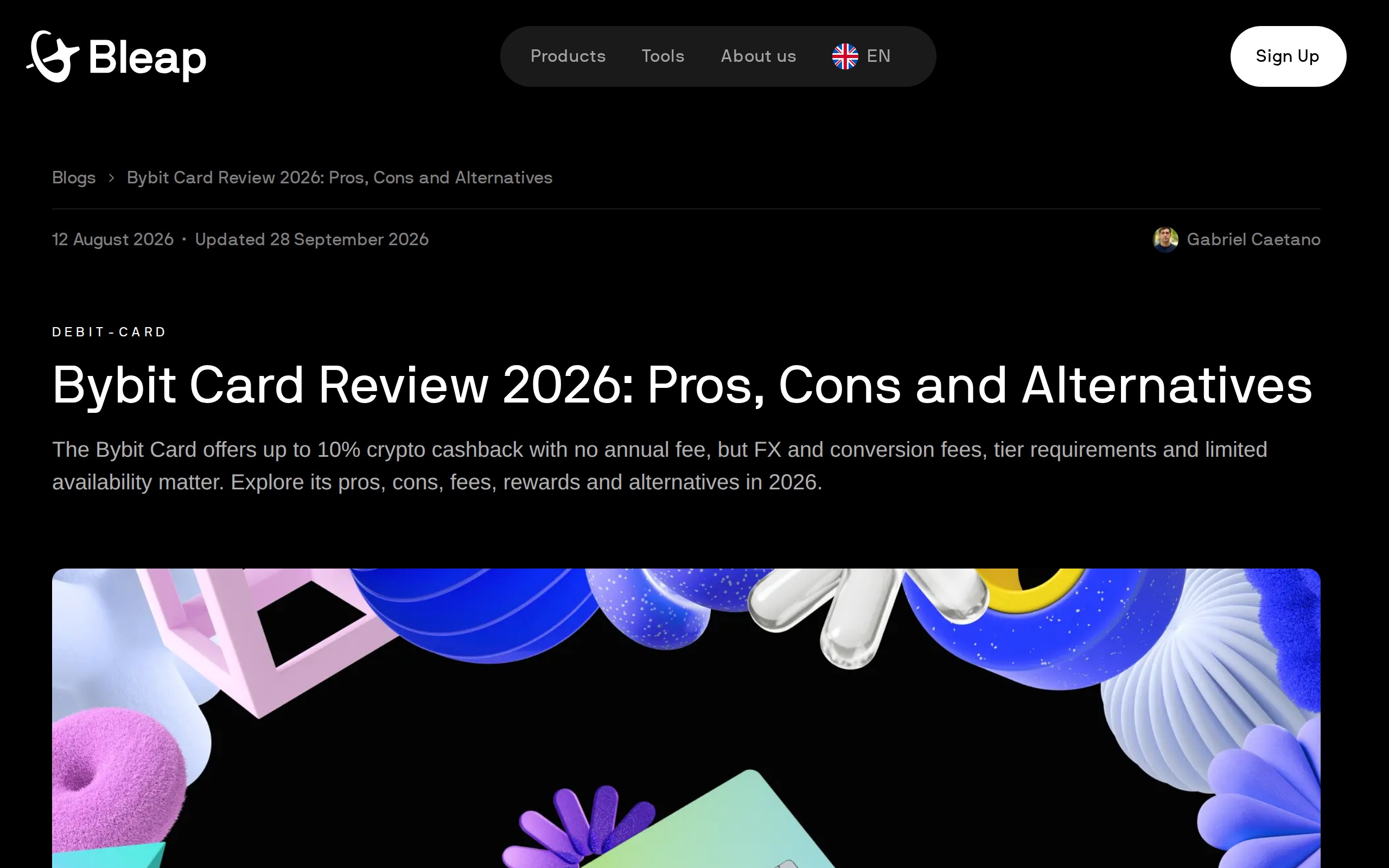
Those two accounts do not match, and we could not settle it from Bybit's site. Treat any single figure as provisional and read the live tier table before you apply.
They also disagree on the reward itself. Coin Bureau says cashback is paid as points redeemable for trading bonuses, fee coupons, NFTs and merchandise, not cryptocurrency. Bleap says it lands as BTC, USDT, USDC or AVAX. Points are worth less than cash to someone who does not trade on Bybit, so this one detail can change the verdict.
What it costs to spend
There is no annual fee, monthly fee or inactivity fee. In the European programme, a virtual card is free and a physical card costs 5 EUR, GBP or USDT.
Spending is where the fees sit. Reviewers report a 0.5% foreign exchange fee on top of the Mastercard rate, and a 0.9% crypto conversion fee with a one-euro minimum. Australia's FX fee is 1%. ATM withdrawals are free up to 100 a month, then 2%.
Add the two European fees together and you give back 1.4% on every purchase before cashback. A user at the 2% base tier nets about 0.6%. Only the upper tiers make the arithmetic work, which is why the ladder matters.
Limits in the EEA are generous: 5,000 a day, 50,000 a month and 250,000 a year, per Coin Bureau.
Where you can actually get it
Coin Bureau names Australia and the European Economic Area as available, and the US, UK, Switzerland, Estonia and Norway as unavailable. Bleap's list is wider, covering Switzerland, Argentina, Brazil, Mexico, Kazakhstan's AIFC and parts of Asia-Pacific, and it says the US is fully excluded. The lists conflict because availability changes by programme.
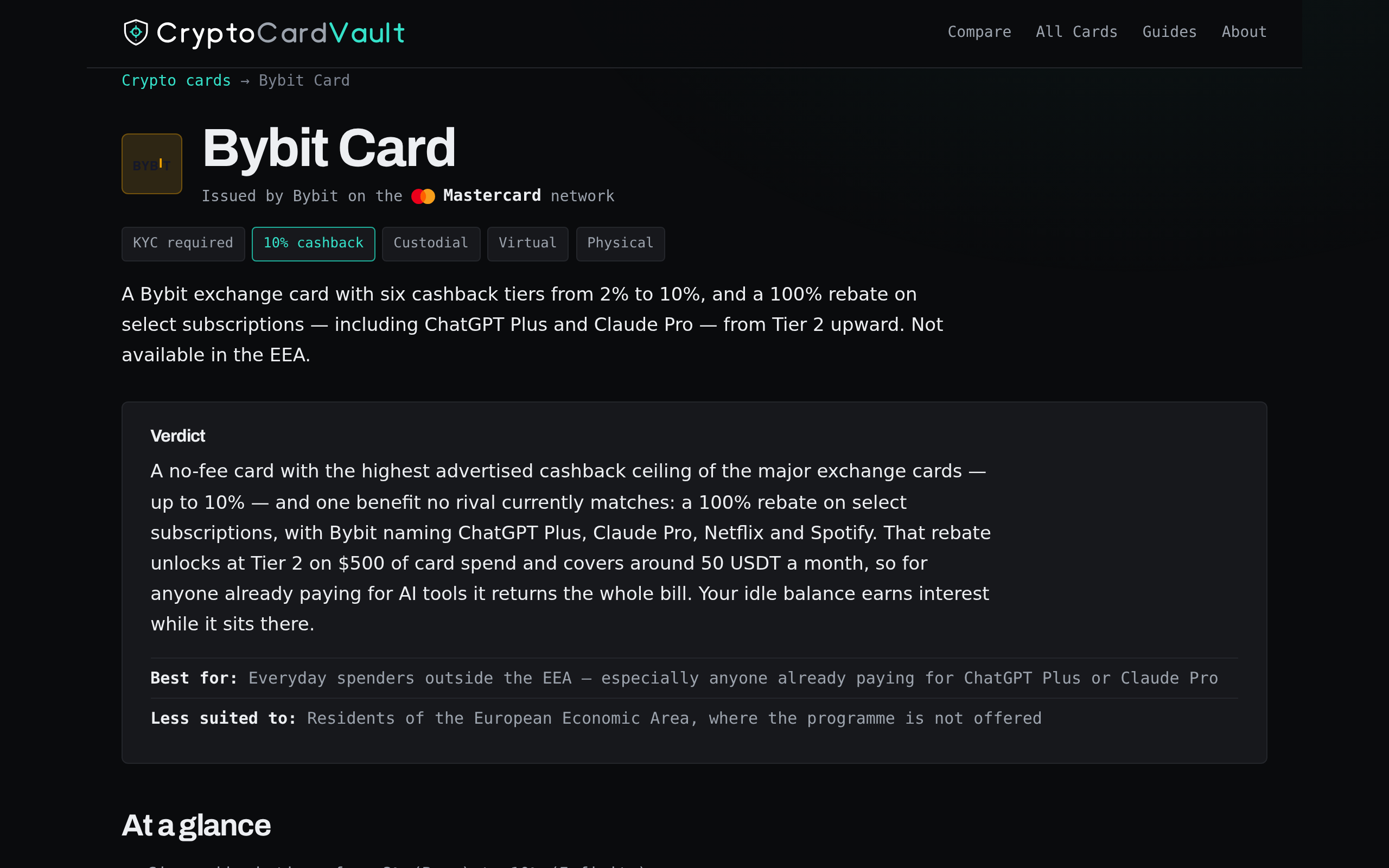
Applying needs full identity verification, and Bleap notes that proof of address is required. Funds sit inside your Bybit account, so you are trusting a custodian. That is worth weighing against the exchange's record, which we cover in our Bybit review: a $1.46 billion theft in 2025 and a patchwork of licences.
How it compares with other exchange cards
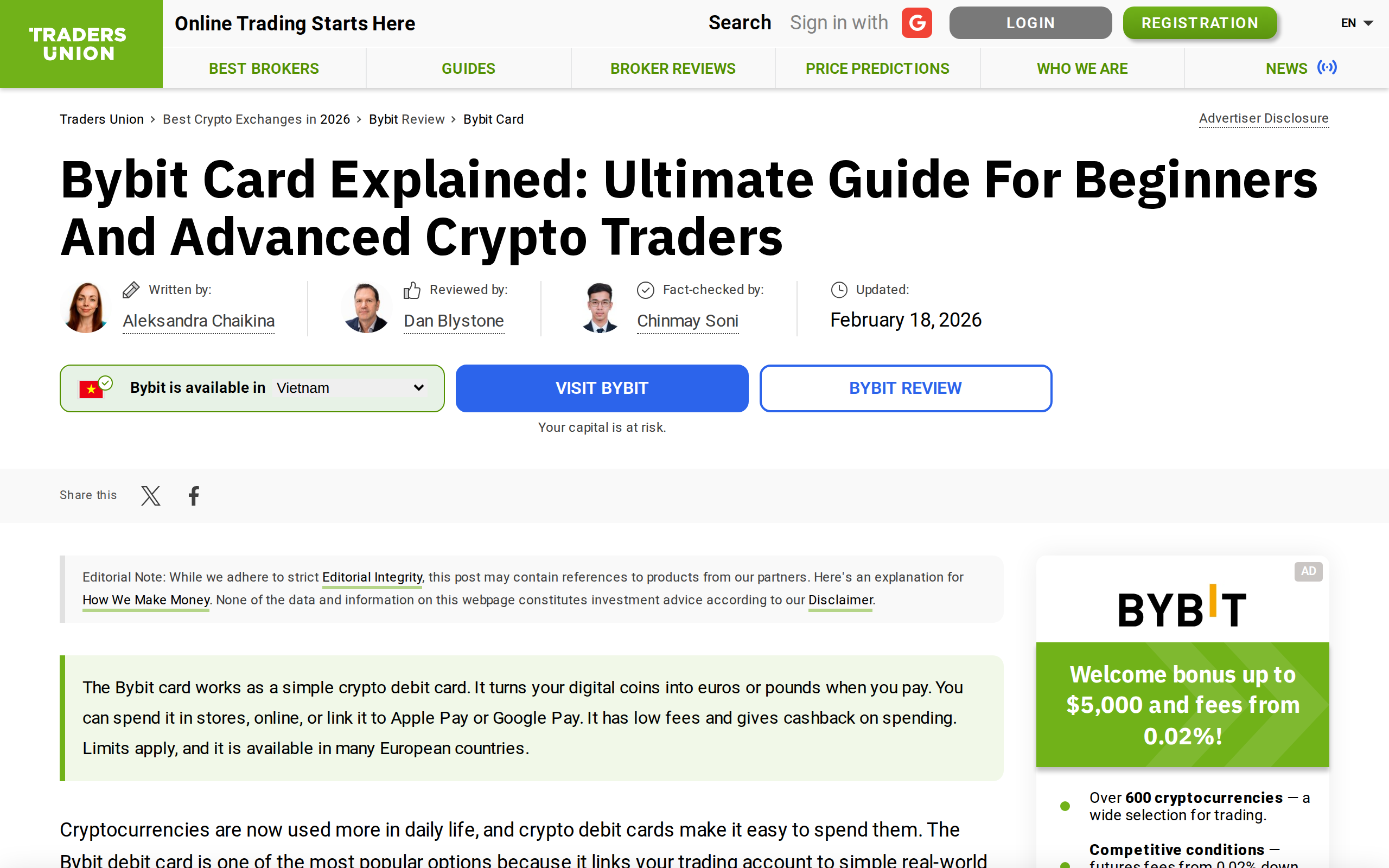
Crypto.com's card ties its best rates to locking CRO, and Coinbase's card needs a large balance for its top reward. See our reviews of the Crypto.com Visa Card and the Coinbase One Card. Bybit's design is similar: the best rate is for people who already hold large balances or trade heavily on the platform. Coin Bureau's own conclusion is that the card suits power users, while the high barrier to the top tier disadvantages the average one.
Bleap, which sells a competing self-custodial card, argues the custodial model and token requirements are the weak spots. It has an interest in saying so, so weigh that.
Who should get it
Take the card if you already trade on Bybit, live in a supported region, can verify the live tier terms and expect to spend enough to climb past the base tier. Skip it if you are in the US or UK, if you want cashback in plain crypto without conditions, or if you would not otherwise keep funds on Bybit.
Nothing here is advice for your situation. Before applying, read Bybit's current fee table for your country, since the numbers above come from reviews and not from a card we held.
Specifications
- Network
- Mastercard debit-style card, virtual and physical
- Annual fee
- None
- Cashback
- 2% to 10% by tier, up to $600 a month at the top (per third-party reviews)
- FX fee
- 0.5% (EEA), 1% (Australia)
- Crypto conversion
- 0.9%, minimum 1 EUR (EEA)
- Physical card
- 5 EUR, GBP or USDT one-off
- ATM
- Free to 100 a month, then 2%
- Spending limits
- EEA: 5,000 a day, 50,000 a month, 250,000 a year
- Not available
- United States and United Kingdom (per Coin Bureau)
As published by Bybit when we tested it.