Crypto.com Visa Card Review: Is the CRO Lock-Up Still Worth It After the Cuts?
Crypto.com's Level Up tiers tie card rewards to a 12-month CRO stake or a monthly fee. We read the official tier table and the reported 2026 reward changes to see who still comes out ahead.
The verdict
The free tier is a spending card and the paid tiers are a bet on CRO. The lower paid tiers are fair if you pay the monthly fee and spend enough to beat it. The staking route ties up $500 to $500,000 for 12 months in a volatile token, so only the highest spenders, comfortable with that risk, should consider it. Everyone else should compare plain cashback cards.
Best for High spenders who already hold CRO and accept lock-up risk
Pros
- Free Basic tier has no annual fee
- Plus tier can be paid for by $4.99 per month instead of staking
- Visa Signature perks and streaming rebates on higher tiers
- Rewards can be taken in BTC or CRO
Cons
- Higher tiers need a 12-month CRO stake of $500 to $500,000
- Reward rates and caps changed and are reported lower or zero without a stake
- BTC rewards are capped per month on lower tiers
- Terms differ by country and card type, so headline rates mislead
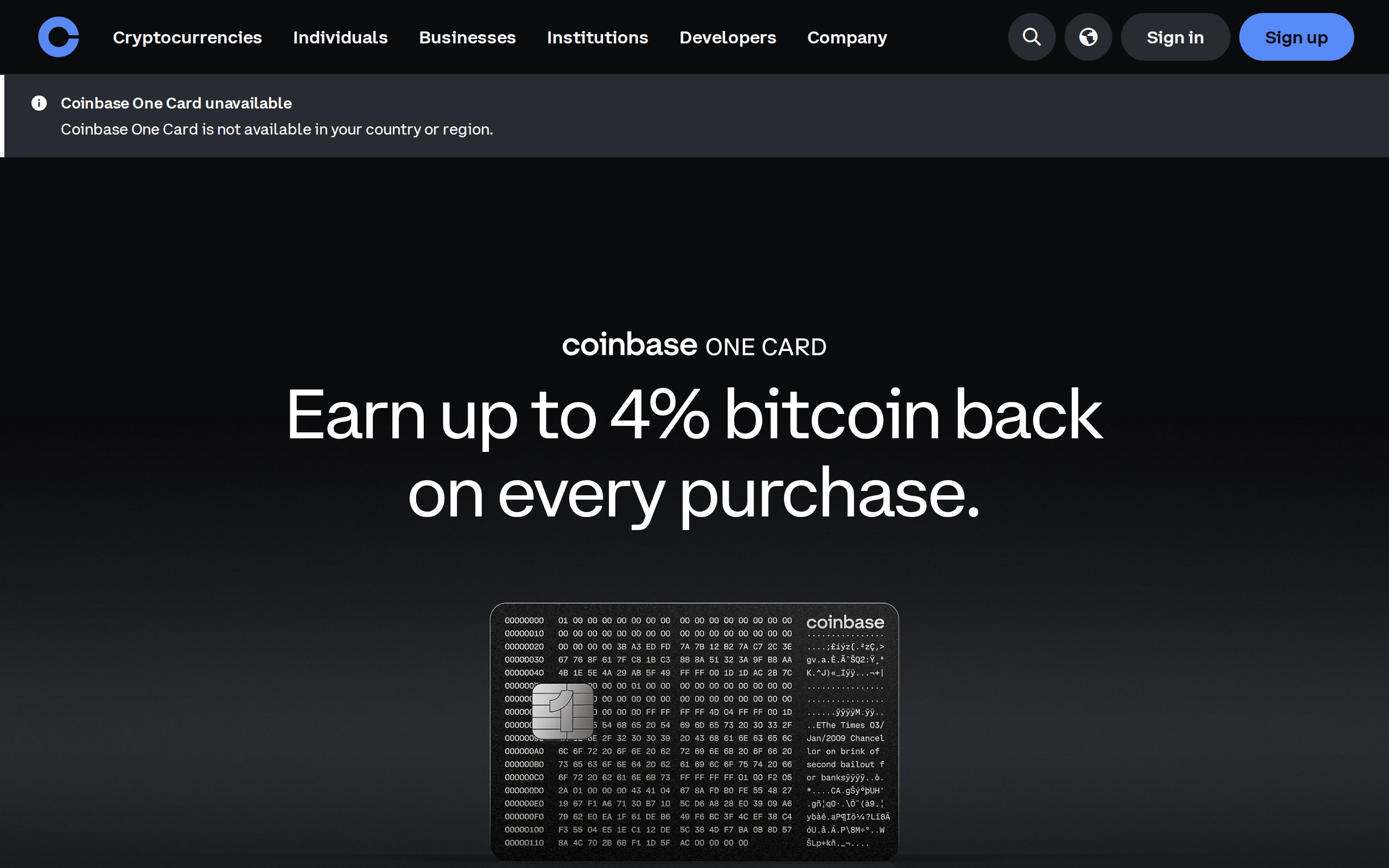
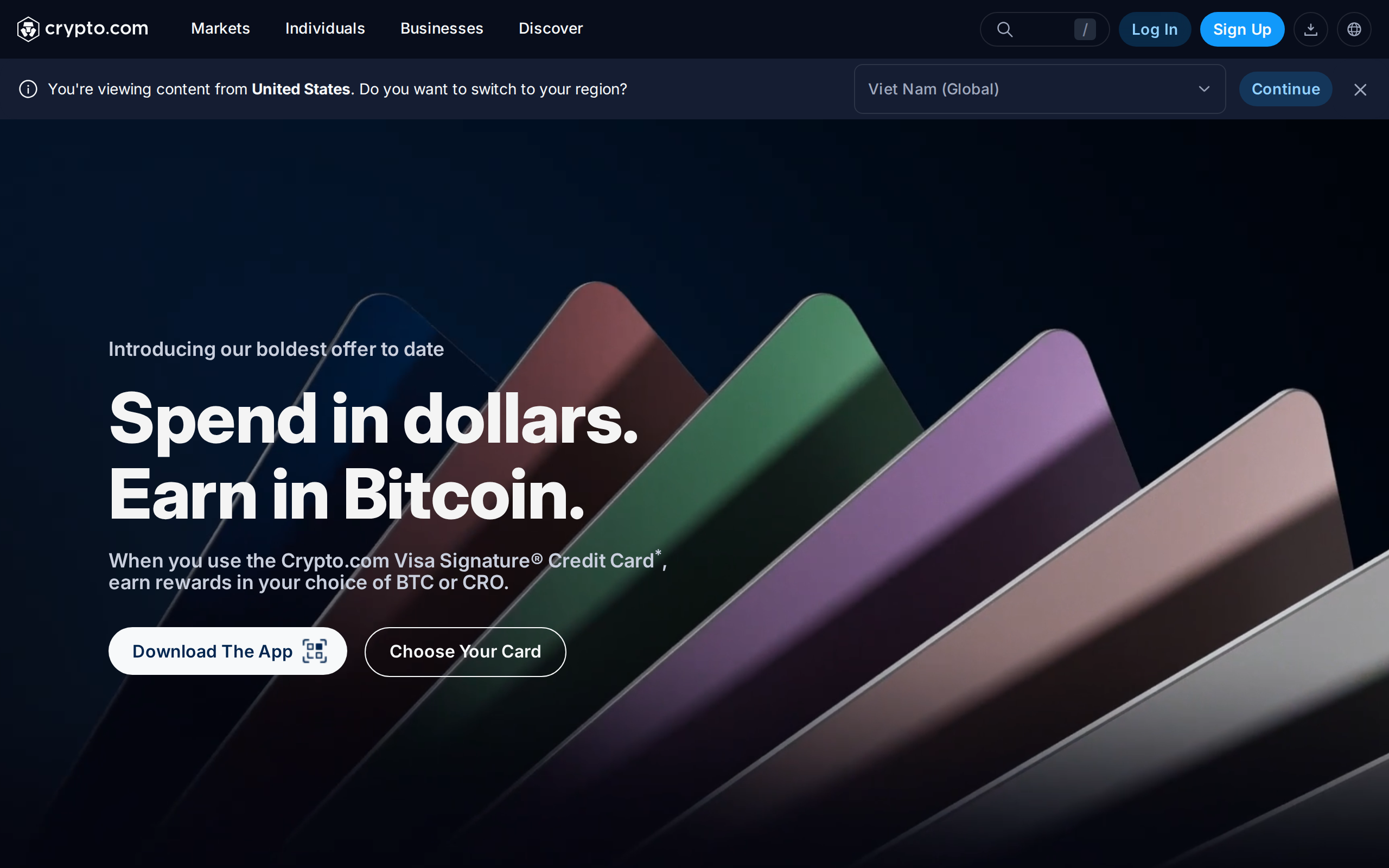
The first thing to settle is which card you mean. Crypto.com sells a prepaid Visa and, in the US, a Visa Signature credit card, and both hang off the same Level Up tier system. Their reward rates are not the same, and the rates quoted in blog posts often belong to a different product than the one you can apply for. We took the numbers below from Crypto.com's own pages and flag where outside reports disagree.
What the tiers cost
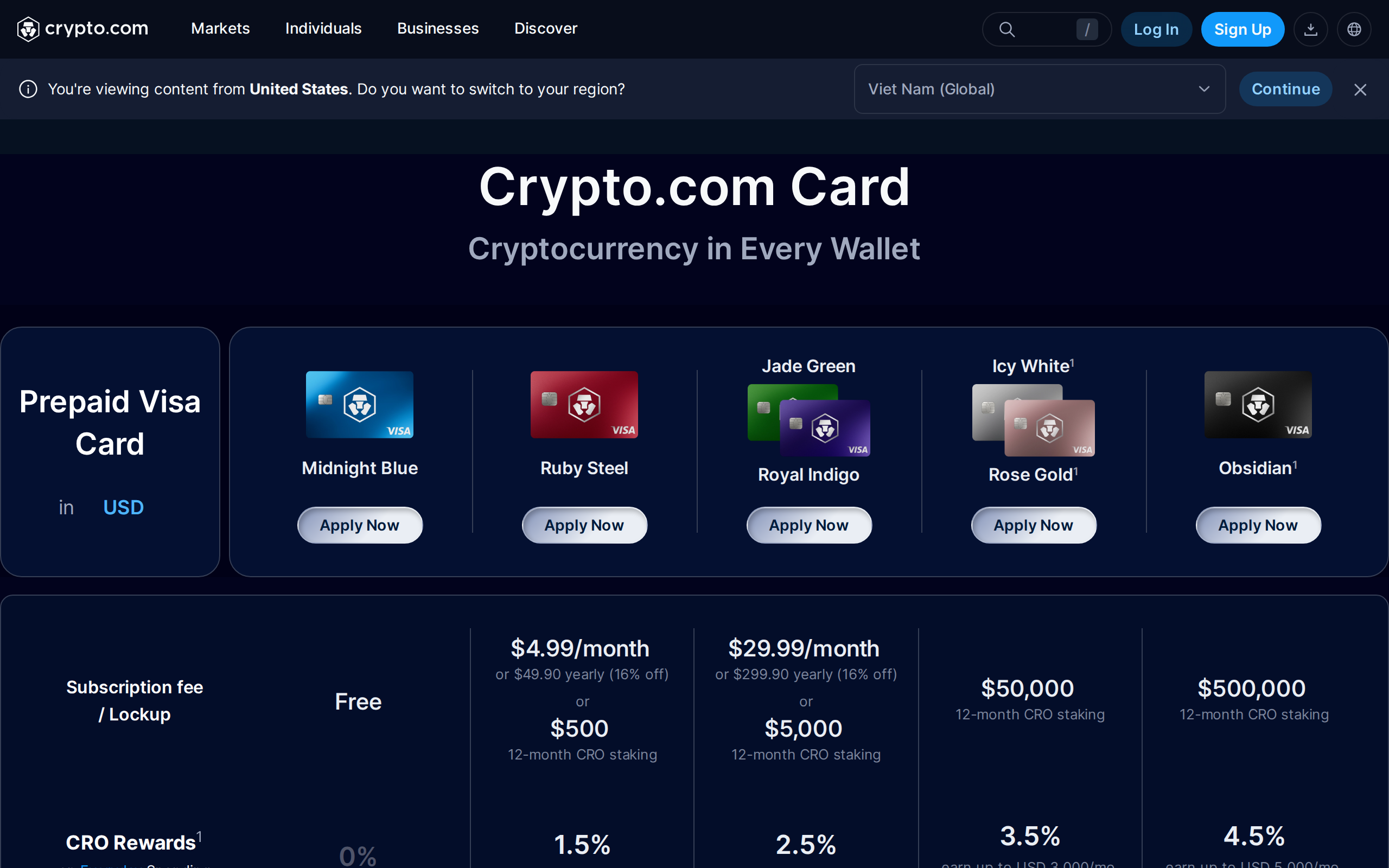
On the credit card page, the Level Up table runs from Basic to Obsidian. Basic is free. Plus costs $4.99 a month, or a $500 CRO stake locked for 12 months. Pro costs $29.99 a month or a $5,000 stake. Private needs $50,000 staked and Obsidian $500,000, with no monthly-fee route.
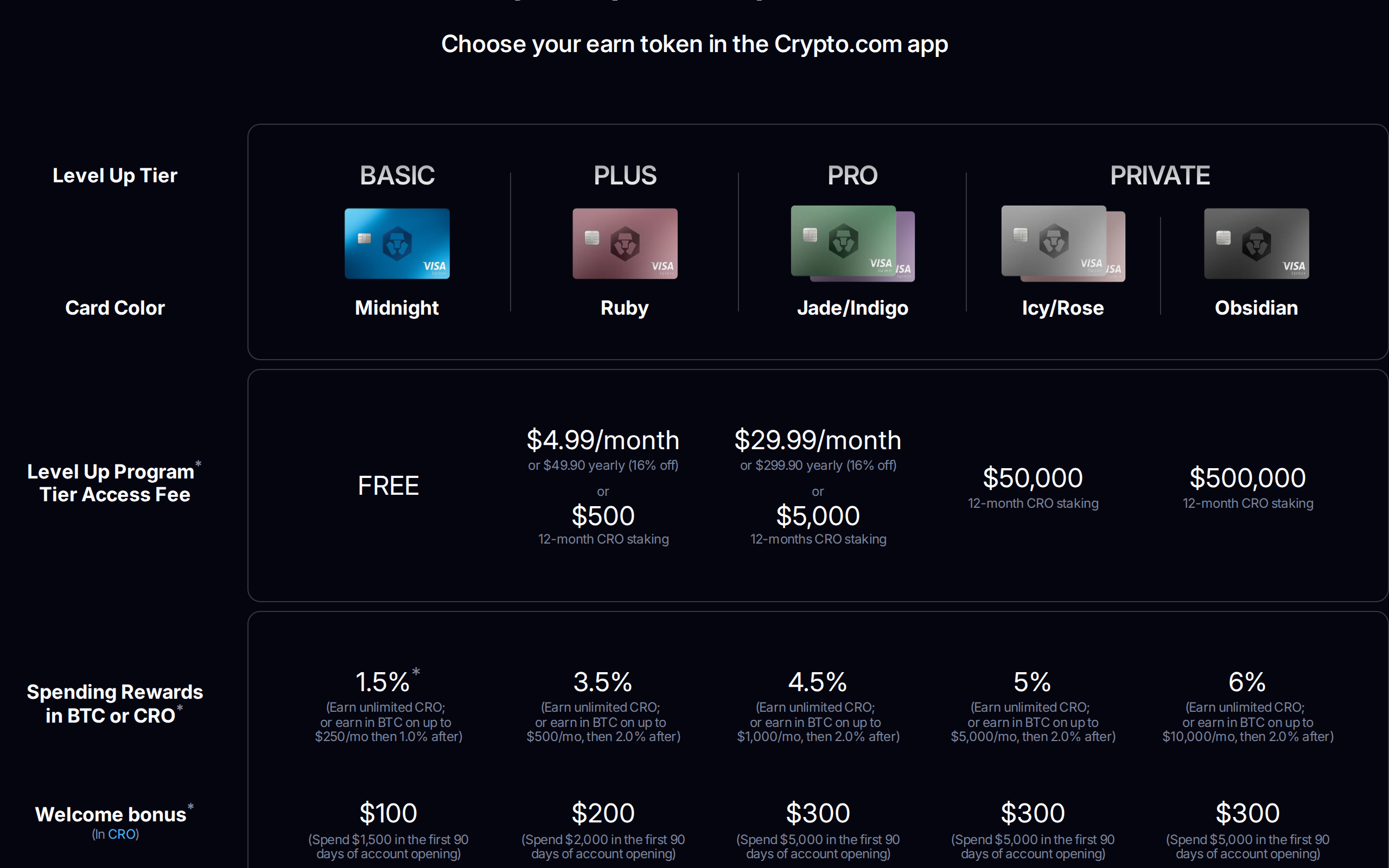
Rewards on that table climb with each rung: 1.5% on Basic, 3.5% on Plus, 4.5% on Pro, 5% on the first Private level and 6% on Obsidian. Each rate has a monthly ceiling after which it drops. Plus, for instance, reads as 3.5% on BTC rewards up to $500 a month and 2.0% afterwards, though the small print is terse and we read it as a spend limit.
The prepaid card page shows the same entry price: $4.99 a month, $49.90 yearly (a 16% discount), or a $500 CRO stake over 12 months.
The maths on Plus
Take the $4.99 monthly route, which costs $59.88 a year. At 3.5% on spend up to $500 a month, the most you earn at the top rate is $17.50 a month, or $210 a year. At 2.0% beyond that, extra spend adds a little more. So a person who spends $500 a month on the card nets roughly $150 a year after the fee, provided the rewards are paid at the quoted rate and in a token whose value holds.
That last clause is the catch. Rewards arrive in BTC or CRO, and both move. A 3.5% reward paid in a token that falls 20% before you sell is a 2.8% reward. Treat the headline as a ceiling, not a promise.
Now compare the staking route. A $500 stake saves the $59.88 fee but ties up $500 for a year in CRO. If CRO falls 12%, you have lost $60, which cancels the saving. For the Pro tier the same logic applies at ten times the size, and for Private and Obsidian the exposure is large enough to be a real investment decision rather than a perk.
What changed, and what is disputed
Third-party coverage, including a report from SpendNode, describes a 2026 overhaul in which users who neither stake nor subscribe earn 0% on some cards, with caps added at lower tiers. That report lists lower rates than the credit card page now shows, for instance 2% on Plus.
We could not reconcile the two. They may describe different card products or different dates. If rewards matter to your decision, open the tier table inside the app for your own country and screenshot it before you apply. Ignore any reviewer, including us, who gives you a single rate without naming the card.
The perks beyond cashback
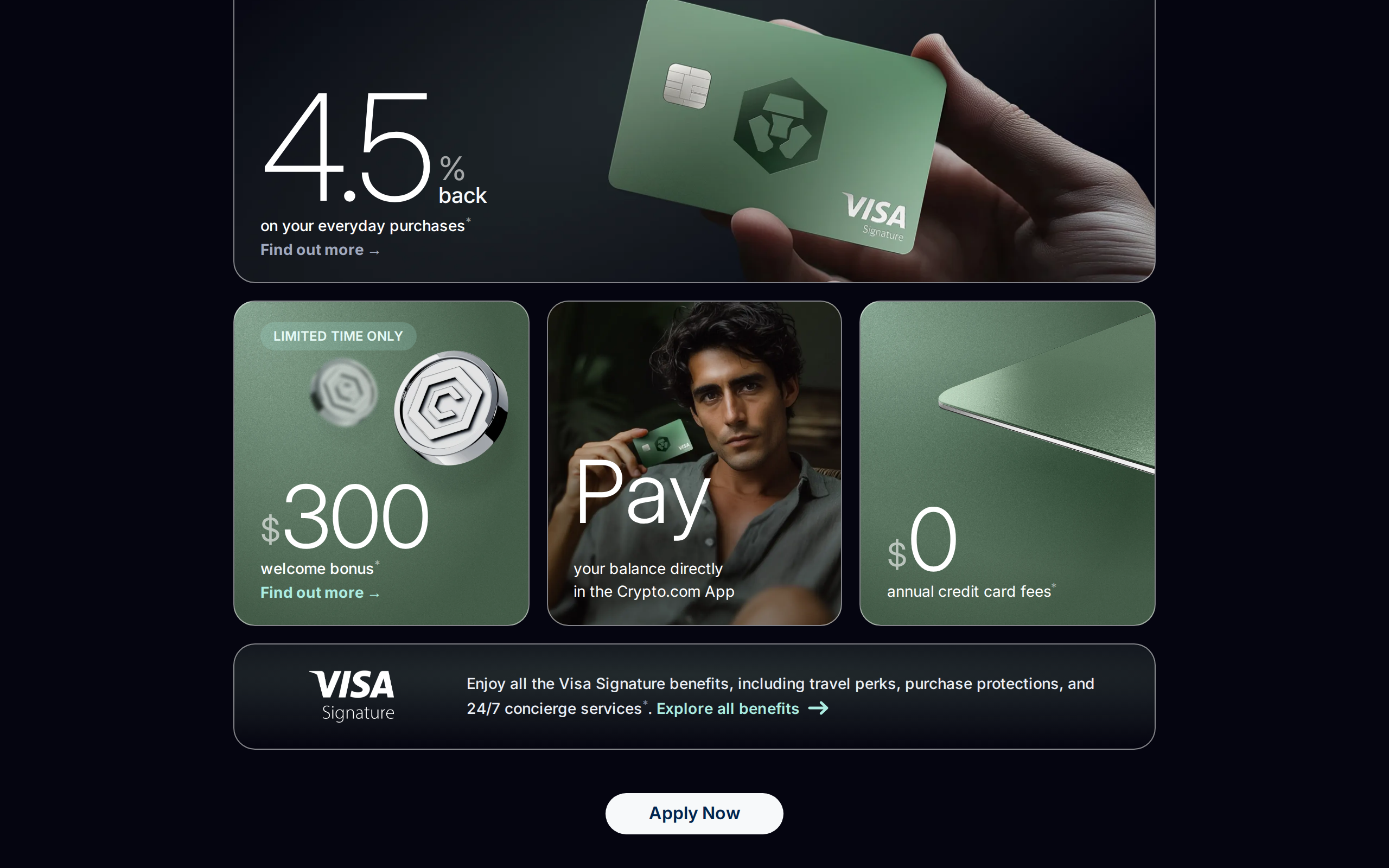
The higher tiers add lifestyle benefits: streaming rebates and event access. The page lists subscription rebates for services such as Netflix and Spotify, and Visa Signature protections including travel perks and purchase cover.
Rebates are worth something only if you already pay for the service. Do not take a tier to get a subscription you would otherwise cancel.
Who should and should not use it
Use the free tier if you want a card tied to a crypto account and do not need rewards.
Consider Plus if you spend several hundred dollars monthly, will pay the $4.99 fee, and want rewards in crypto.
Think hard before staking $5,000 or more. A 12-month lock in one token is a position, and the card benefit is the smaller part of it.
Skip it if you want predictable cashback. A plain fiat cashback card pays in dollars, with no lock-up.
Verdict
The product works as a card. The scoring problem is the structure around it: rewards that depend on a locked, volatile token, rates that differ by product and date, and caps that blunt the top rate. Score it in the middle of the field. It rewards committed Crypto.com users and gives everyone else a reason to shop around. This is not financial advice, so check current terms in the app before you apply or stake anything.
Specifications
- Basic
- Free, 1.5% rewards on the credit card page
- Plus
- $4.99 per month or $500 12-month CRO stake
- Pro
- $29.99 per month or $5,000 12-month CRO stake
- Private
- $50,000 12-month CRO stake
- Obsidian
- $500,000 12-month CRO stake
- Reward token
- BTC or CRO, per tier caps
- Network
- Visa, Visa Signature on the credit card
As published by Crypto.com when we tested it.