Coinbase One Card Review: Is 4% Bitcoin Back Real When You Need $200,000 on Coinbase?
The Coinbase One Card advertises up to 4% back in bitcoin, but the rate climbs with your Coinbase balance and needs a paid membership. We worked out who actually beats a flat 2% card.
The verdict
The headline 4% is real but sits behind a $200,000 balance on Coinbase, and the boosted rates stop at $10,000 of purchases a month. Below $10,000 in assets the card pays 2%, the same as free cards, while the Coinbase One membership costs $49.99 a year. It makes sense for people who already keep $50,000 or more on Coinbase and want bitcoin rewards. For everyone else a flat-rate card is simpler and cheaper.
Best for Big Coinbase holders who want bitcoin rewards on daily spend
Pros
- Rewards paid in bitcoin on every purchase, not limited to spending categories
- $0 annual fee on the card itself, and no foreign transaction fees
- Rate rises from 2% to 4% as your Coinbase balance grows
- Pay the bill from a bank account or from crypto held on Coinbase
Cons
- Needs a paid Coinbase One membership of $49.99 a year to open and keep
- The 4% tier needs $200,000 or more in assets held on Coinbase
- Rates above 2% apply only to the first $10,000 of purchases each month
- Crypto purchases count as cash advances at a 32.24% APR, with no rewards
"Up to 4% back" is a phrase with a lot of work to do. On the Coinbase One Card the work is done by the words "up to", and the price of reaching the top is a balance most cardholders will never hold.
We did the arithmetic for each tier against a plain 2% card with no fee, because that is the comparison that decides whether this card earns a place in your wallet.
What Coinbase is actually selling
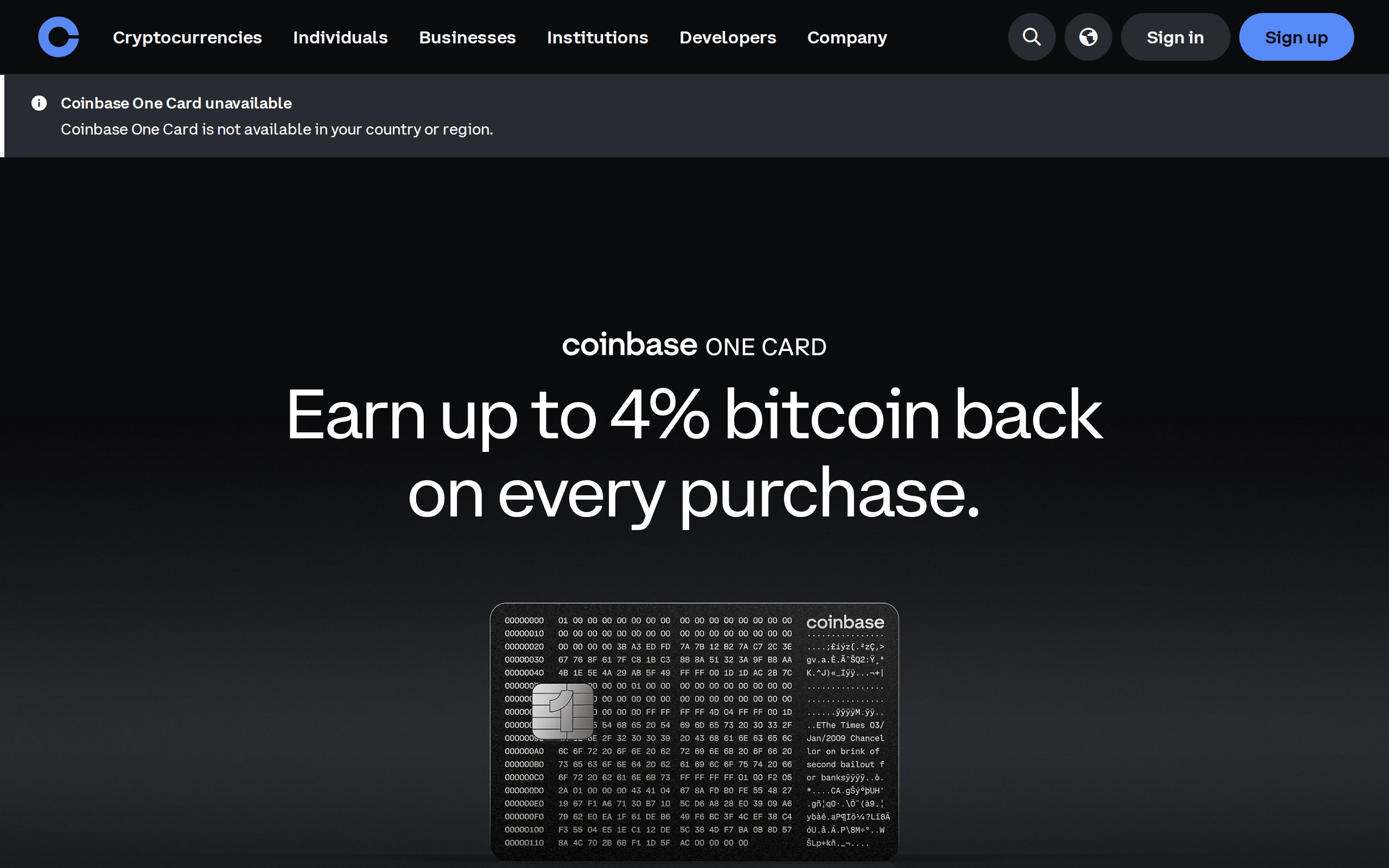
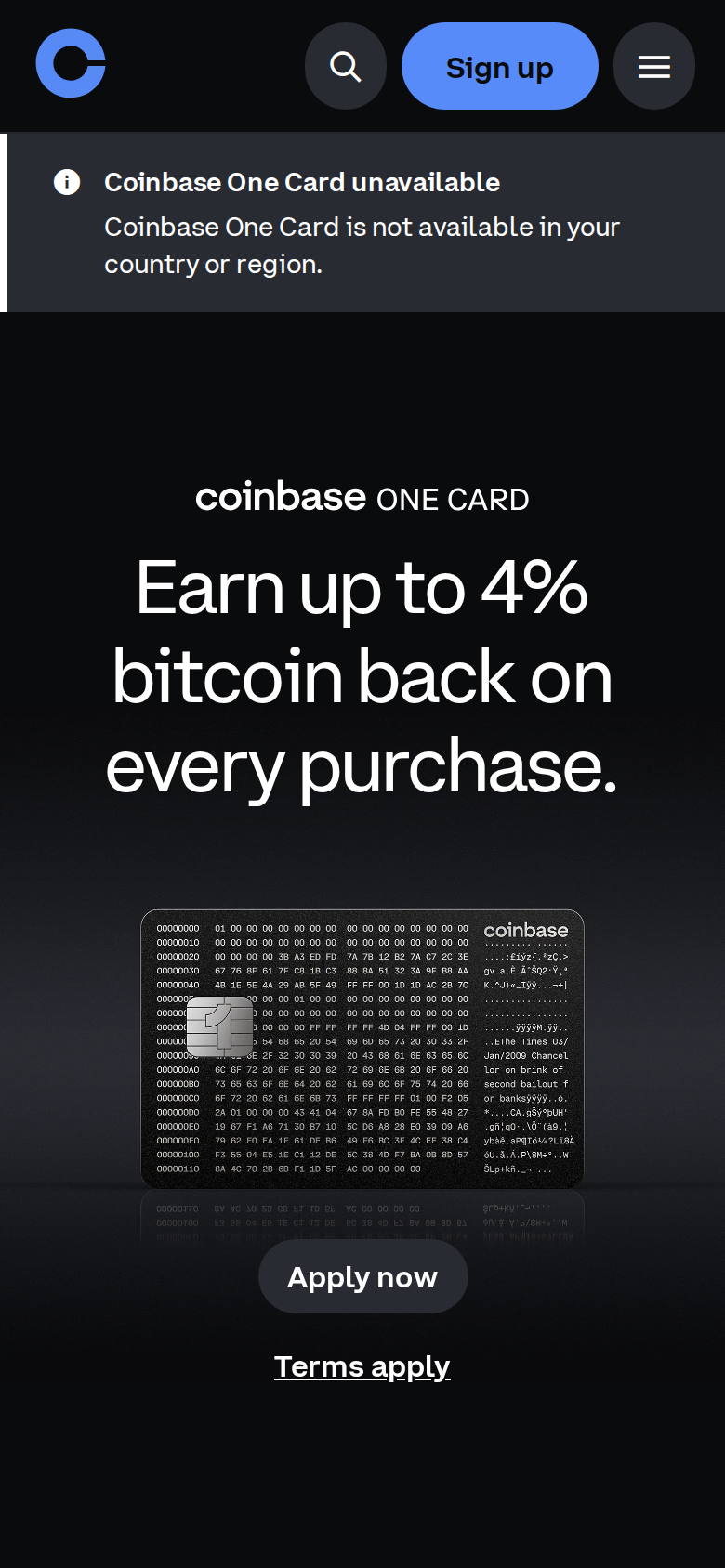
The card page leads with the promise, "Earn up to 4% bitcoin back on every purchase", and a second line, "Hold more. Earn more." The second line is the real terms. Your rate depends on how much you keep on Coinbase.
Upgraded Points lists the tiers by balance: 2% under $10,000, 2.5% from $10,000, 3% from $50,000 and 4% from $200,000. Card Savvy adds two details that matter. Rewards use the average of your daily end-of-day balances over the prior 30 days, so you cannot park cash for a day. And rates above 2% apply only to the first $10,000 of purchases a month.
The card is issued by First Electronic Bank on the American Express network, with no foreign transaction fees, according to CoinDesk's launch coverage.
The membership is the gate
There is no card without Coinbase One. The membership page pitches "zero trading fees, boosted staking rewards, and more". In our capture it showed a euro price because of where we browsed from, so rely on the U.S. figures instead: $49.99 a year on the annual plan, per CoinDesk and Upgraded Points.
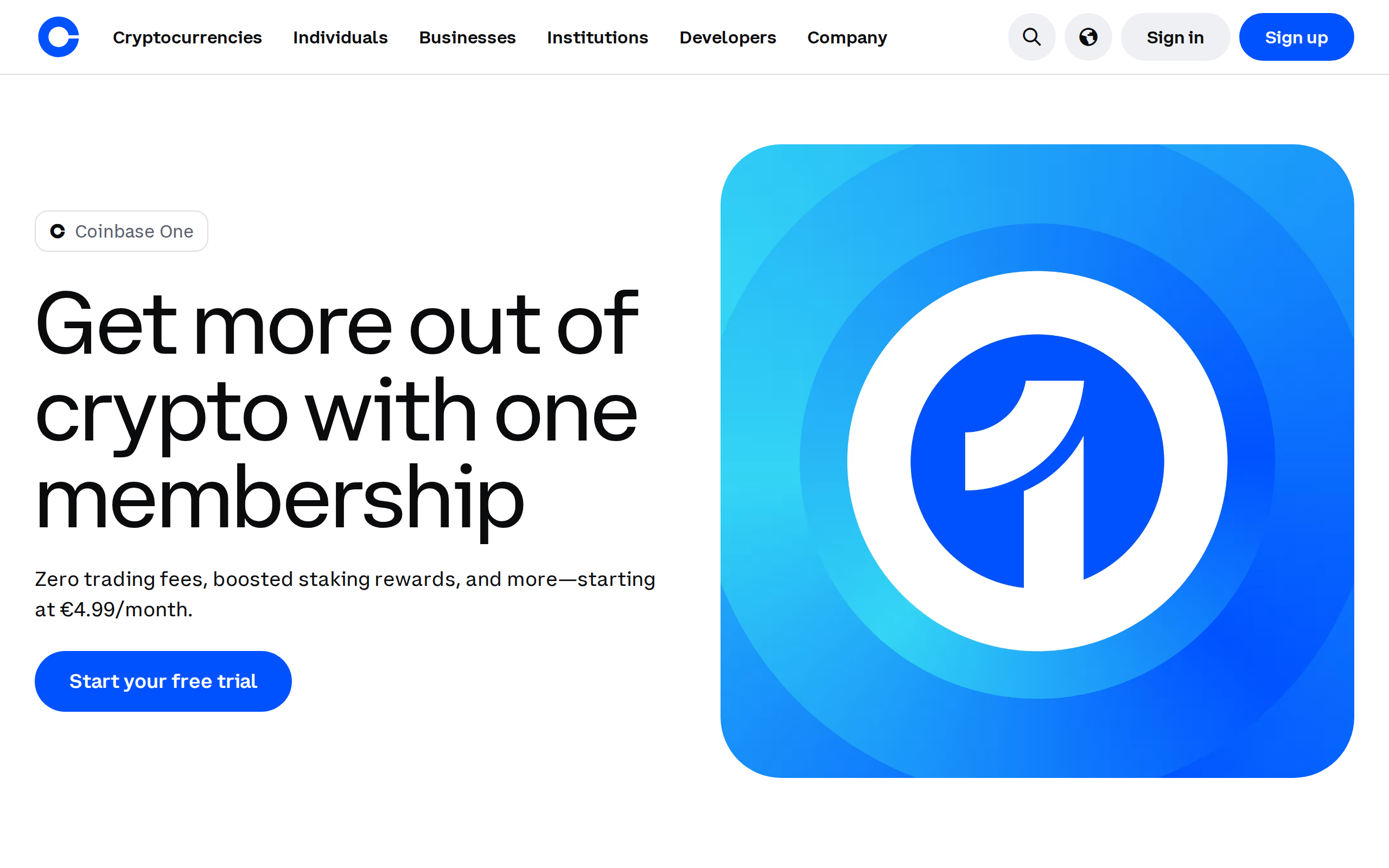
So the card's $0 annual fee comes with a $49.99 membership. If you already pay for Coinbase One for its trading-fee waiver, the card is a free extra. If you do not, the membership is part of what the card costs.
Where the maths lands
Take a flat 2% card as the yardstick and count the extra bitcoin from each tier against the $49.99.
| Your Coinbase balance | Rate | Extra over 2% | Annual spend to cover $49.99 | | --- | --- | --- | --- | | Under $10,000 | 2% | 0 | Never | | $10,000 to $49,999 | 2.5% | 0.5% | About $10,000 | | $50,000 to $199,999 | 3% | 1% | About $5,000 | | $200,000 or more | 4% | 2% | About $2,500 |
Below $10,000 you earn what a free card pays, so you lose the membership fee. In the middle tiers the card wins only if you spend more than the break-even figure. Even then you are choosing to keep $10,000 to $200,000 on an exchange to earn a few hundred dollars a year in rewards, and an exchange balance carries platform risk that a bank balance does not.
At the top tier, the $10,000 monthly cap means the 4% rate pays on at most $120,000 of spending a year. That is a ceiling of about $2,400 more than a 2% card. Worth having, if you have $200,000 sitting on Coinbase anyway.
What the tiers mean in daily life
Card Savvy says assets that count include crypto, USD and USDC on Coinbase. That makes the balance volatile. A bitcoin-heavy account that drops 30% in a bad month can slip a tier, and your next statement pays a lower rate on money you already spent. The 30-day averaging smooths a spike but does not protect you from a slide.
The reverse also holds. A rising market lifts you into a better tier with no change in your own behaviour, which makes the headline rate look better in good times than it is across a full cycle.
The fine print worth reading
Buying crypto with the card counts as a cash advance at a 32.24% APR, per Card Savvy, and earns no rewards.
Rewards exclude peer-to-peer payments, gift cards, gambling and ATM withdrawals.
Rewards arrive as bitcoin. That means the value moves with the price between earning and selling, and tax may apply when you sell. CoinDesk notes the rewards do not appear on a 1099 when earned.
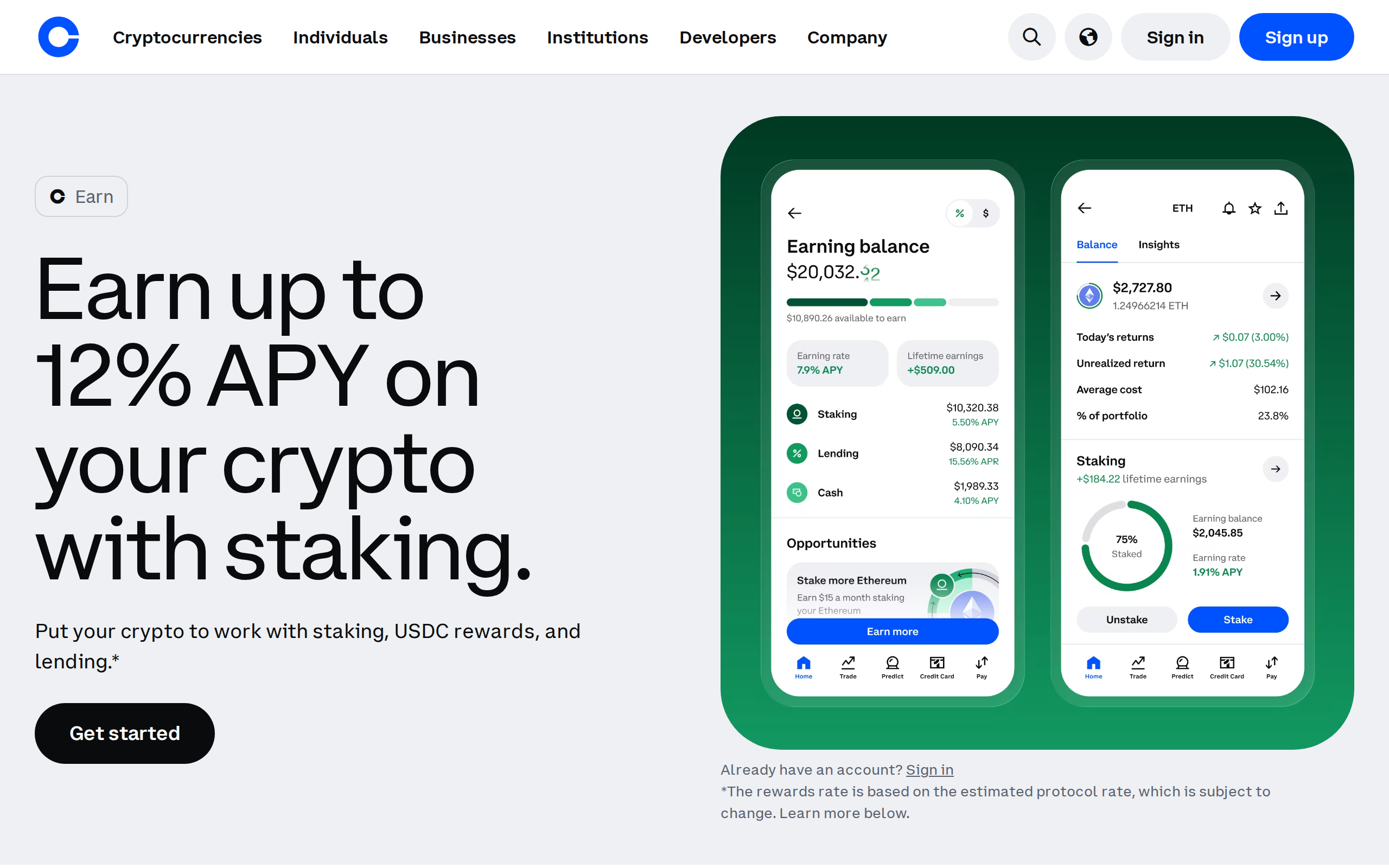
For context on what else Coinbase wants you to hold there, its Earn page advertises staking rewards of "up to 12% APY", a rate that is variable and based on the protocol.
Who it suits
Buy it if you hold $50,000 or more on Coinbase already, pay for Coinbase One, and want your rewards in bitcoin.
Skip it if your balance is under $10,000. A flat 2% card with no membership does the same job.
Think twice about moving funds to Coinbase just to climb a tier. The rewards do not offset concentration risk.
Verdict
A card built for Coinbase's largest customers, marketed to everyone. We rate it 6.4. This is a product assessment, not personal financial advice, and bitcoin rewards can lose value before you sell them.
Specifications
- Card annual fee
- $0, but Coinbase One membership required
- Coinbase One
- $49.99 a year for the annual plan
- Under $10,000 in assets
- 2% in bitcoin
- $10,000 to $49,999
- 2.5% in bitcoin
- $50,000 to $199,999
- 3% in bitcoin
- $200,000 or more
- 4% in bitcoin, boosted rate on first $10,000 a month
- Network and issuer
- American Express, issued by First Electronic Bank
- Foreign transaction fee
- None
As published by Coinbase when we tested it.