ether.fi Cash Review: Spending Against Staked ETH Works Until a 27% Drop Forces a Sale
ether.fi Cash is a Visa credit card that borrows at about 4% against weETH, with 3% cashback on the first $2,000 a month. A 27% fall from the maximum borrow starts liquidation.

The verdict
ether.fi Cash lets you spend without selling staked ETH, and the 3% cashback tier on the first $2,000 a month is generous. The catch is leverage you may not feel: borrowing at the 55% cap means a fall of roughly 27% in your collateral starts liquidation, with a 3.5% penalty. It suits holders who borrow a small share of their weETH or spend stablecoins. It is a poor fit for anyone who treats the limit as a budget.
Best for ETH holders who borrow lightly and want self-custody with a Visa card
Pros
- Self-custodial Safe vault, so the card spends from a balance you control
- Core tier cashback of 3% on the first $2,000 of monthly spend
- Direct Pay mode spends stablecoins with no liquidation risk
- Borrow Mode costs about 4% a year while weETH keeps earning staking yield
- No annual fee is listed on the product page
Cons
- A fall of about 27% from the 55% LTV cap reaches the 75% liquidation threshold
- Liquidation carries a 3.5% bonus to liquidators on weETH collateral
- Reviewers report a 1% FX fee and 2% ATM fee that marketing does not stress
- Excluded in about 20 US states and 20 countries, including the Netherlands
- Only one collateral asset, weETH, so smart-contract and depeg risk stack up
Most crypto cards sell your coins at the till. ether.fi Cash tries something else: it lets staked ETH sit in a vault you control while a card spends against it. That is a clever design, and it deserves one number before anything else. Borrow the maximum and a drop of about 27% in your collateral puts you at the liquidation line.
How the card gets paid
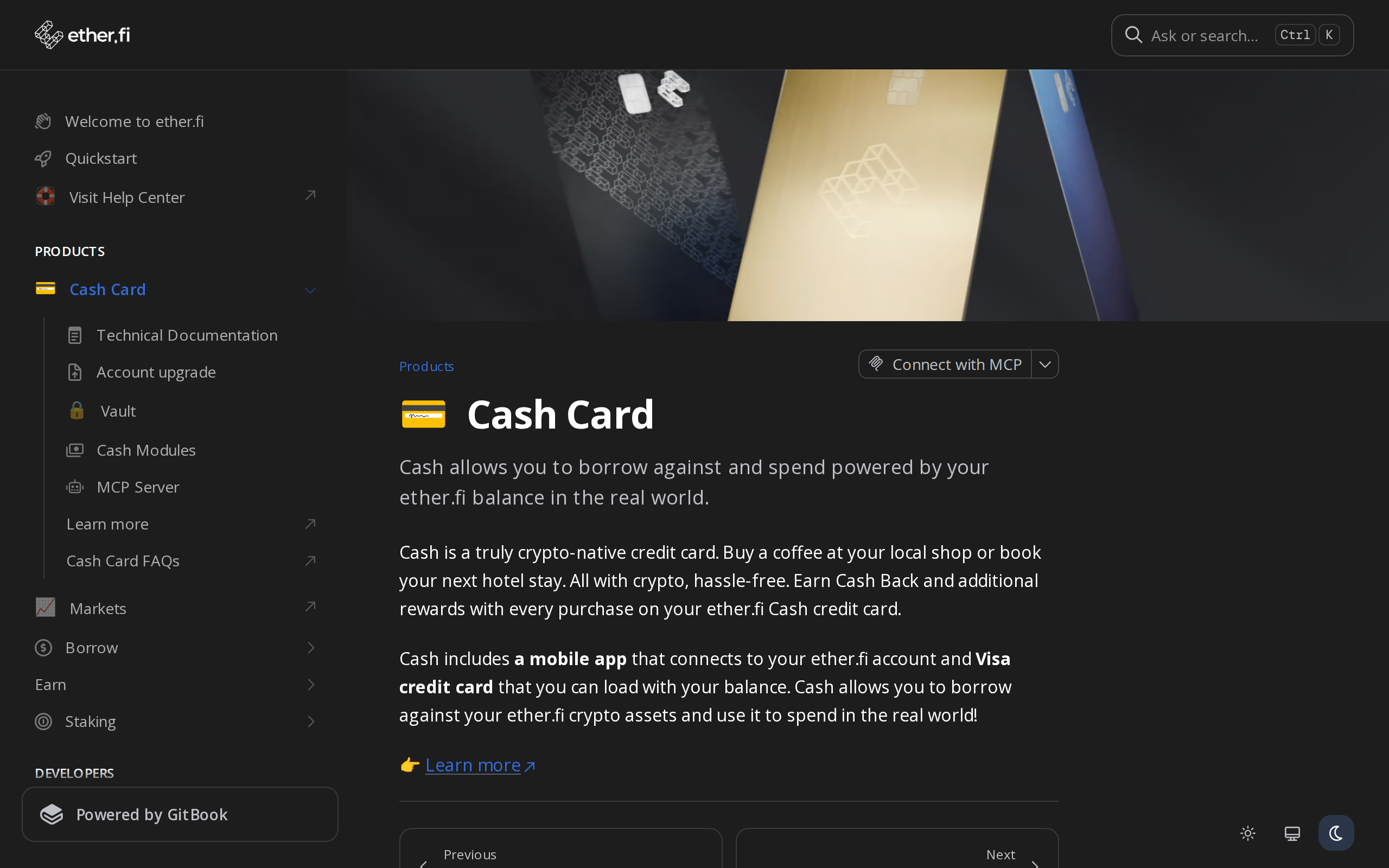
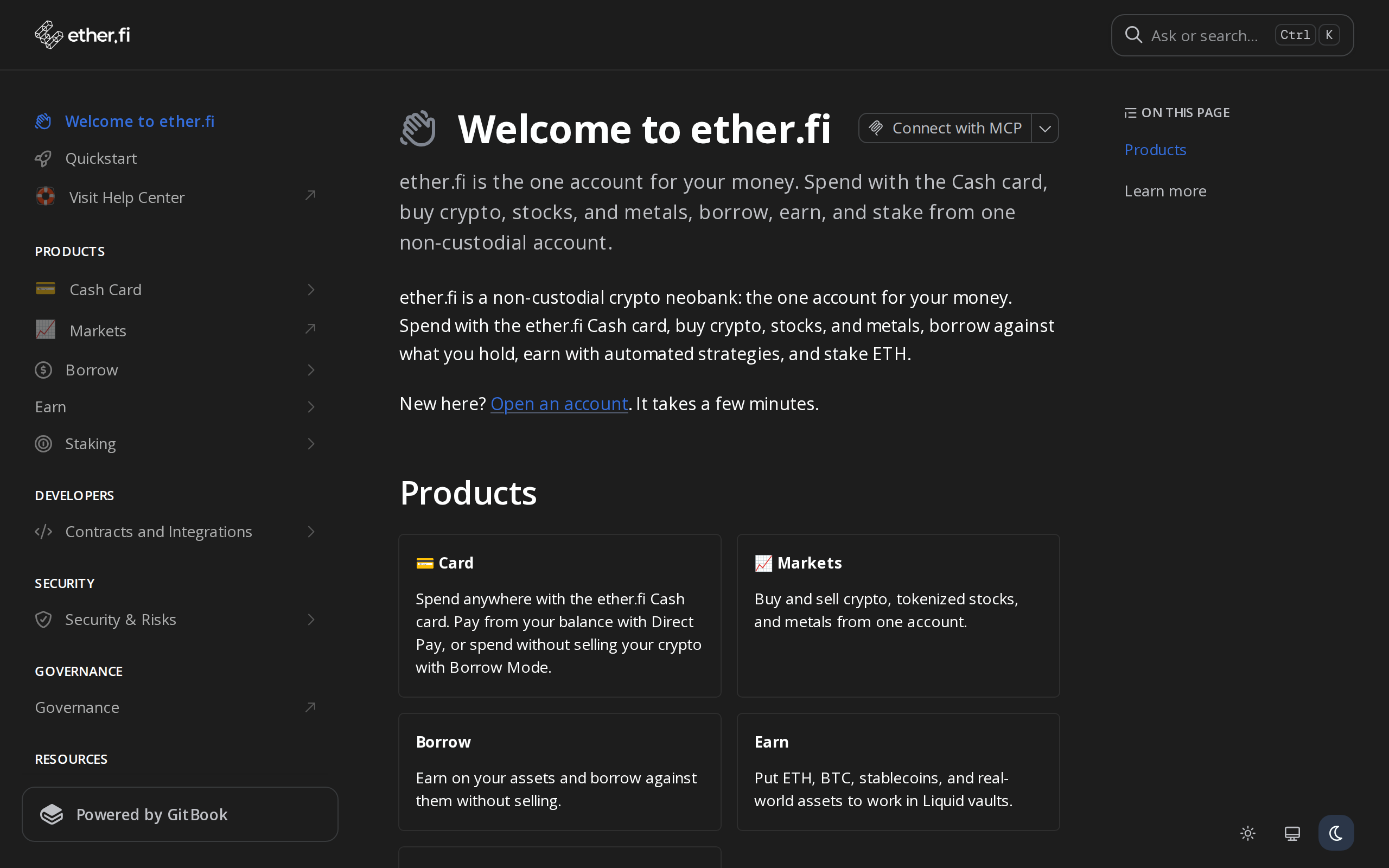
The card is a Visa credit product, and the account lives in a Safe smart-contract vault rather than at a bank. The ether.fi docs describe it as a way to borrow against and spend from your balance in the real world, with a mobile app and cashback.
There are two modes, as independent summaries explain. In Direct Pay you hold stablecoins in the vault and spend them as you would any balance. Nothing is borrowed, so nothing can be liquidated. In Borrow Mode a purchase becomes a stablecoin loan against your weETH, a liquid staked form of Ether, so you keep the position and its staking yield.
The tiers and the cashback
The product page sorts customers into four account levels: Core, Luxe, Pinnacle and VIP.
According to Crypto Card Guy, Core pays 3% cashback on the first $2,000 you spend each month, then 1% up to $3,000 and 0.5% beyond that. Luxe stretches the 3% band to $10,000 and Pinnacle to $50,000. The same source flags a legal cap of $1,000 a month that marketing leaves out, and says the payout asset can be changed at the issuer's discretion. We could not confirm the cap from the product page, so read the cardholder terms before you rely on the headline.
For an ordinary user, the Core tier is the one that matters. Spend $1,000 a month and 3% is $30 back. That beats most fiat cards and matches the better crypto ones.
The fees nobody puts in the banner
Every card has a price list, and this one is split across documents. The same reviewer reports a 1% foreign-exchange fee, a 2% ATM charge capped per day, and a $40 deposit for a physical Core card that is refunded only on an upgrade to Luxe within a year. Marketing claims zero FX on some currencies, so the sources disagree. We trust the written schedule over the banner, and so should you.
The product page lists no annual fee. Borrow Mode costs about 4% a year with no grace period, per the same review, which means a month of unpaid spend starts costing you at once. Treat it like a loan, because it is one.
What happens when ETH falls
Here is the part that deserves your full attention. For weETH, the loan-to-value cap is 55% and the liquidation threshold is 75%, per Crypto Card Guy and other summaries. Liquidators receive a 3.5% bonus when a position is closed out.
Do the arithmetic. Say you deposit $10,000 of weETH and borrow the full 55%, which is $5,500. Liquidation starts when the debt reaches 75% of the collateral's value. That happens when the collateral falls to about $7,333, a drop of 26.7%. ETH has moved that far in a few days more than once.
Borrow less and the cushion grows. At 30% of the collateral, the fall needed is 60%. That is why we would keep the borrowed share small, or use Direct Pay for ordinary spending and fund it from stablecoins.
Three other risks sit under the surface. weETH can trade below ETH in a panic, a smart-contract flaw could hit the vault or the lending module, and a liquidation is a taxable sale in many countries. None of this is unique to ether.fi. All of it is easier to forget when the card feels like a debit card.
Where you can use it
Availability is patchy. The same review lists roughly 20 US states and 20 countries as excluded, among them the Netherlands, Finland and Estonia, plus India and Vietnam. Sign-up needs identity checks and proof of address. If you live in a listed place, you are out.

Our view
ether.fi Cash is a good product for a narrow reader: someone who already holds weETH, wants to keep it, and will borrow a modest fraction for everyday spending. It rewards discipline.
It is a poor choice for a first crypto card, for anyone who cannot watch a position during a crash, or for people in an excluded region. A plain stablecoin card is simpler. Nothing here is advice to borrow against your holdings, and a market fall can cost you the collateral.
Specifications
- Card type
- Visa credit, non-custodial Safe vault
- Borrow cost
- About 4% APY in Borrow Mode
- Max LTV (weETH)
- 55%
- Liquidation threshold
- 75%
- Liquidation bonus
- 3.5% on weETH
- Core cashback
- 3% to $2,000, then 1% to $3,000, then 0.5%
- Tiers
- Core, Luxe, Pinnacle, VIP
- Physical card (Core)
- $40 deposit, reported
As published by ether.fi when we tested it.