CoinGecko Review: Trustworthy Prices on the Free Site, and a Premium Tier Few Readers Need
CoinGecko covers 18,000+ coins and 1,500+ exchanges for free. We look at how it filters bad data, what Premium and the paid API add, and why its price pages beat its exchange rankings as a reference.
The verdict
CoinGecko is the best free place to check a coin price, its listings and which exchanges trade it. Broad coverage, a published exchange Trust Score and a free API tier make it a default reference. Premium adds wallet tracking and no ads, which suits a small group of users. The paid API is for developers, and its entry plans start well above the free tier.
Best for Anyone checking prices, listings and exchange quality
Pros
- Covers 18,000+ coins, 600+ categories and 1,500+ exchanges at no charge
- Exchange Trust Score is published and scores liquidity, security, regulation and reserves
- Free Demo API allows 100 calls a minute and 10,000 calls a month
- GeckoTerminal adds on-chain DEX data across 200+ networks
Cons
- Premium mostly adds portfolio tracking and no ads, not better prices
- Paid API plans jump from free to about $35 a month, then $129 and up
- Trust Score depends on a method that CoinGecko itself has revised
- Small-cap and new-token data can be thin or lag the real market
Most crypto data sites are really sales funnels. CoinGecko is the one we open when we want a number and not a pitch. The free site is good enough that the honest question is not whether to use it but whether anything it sells is worth buying.
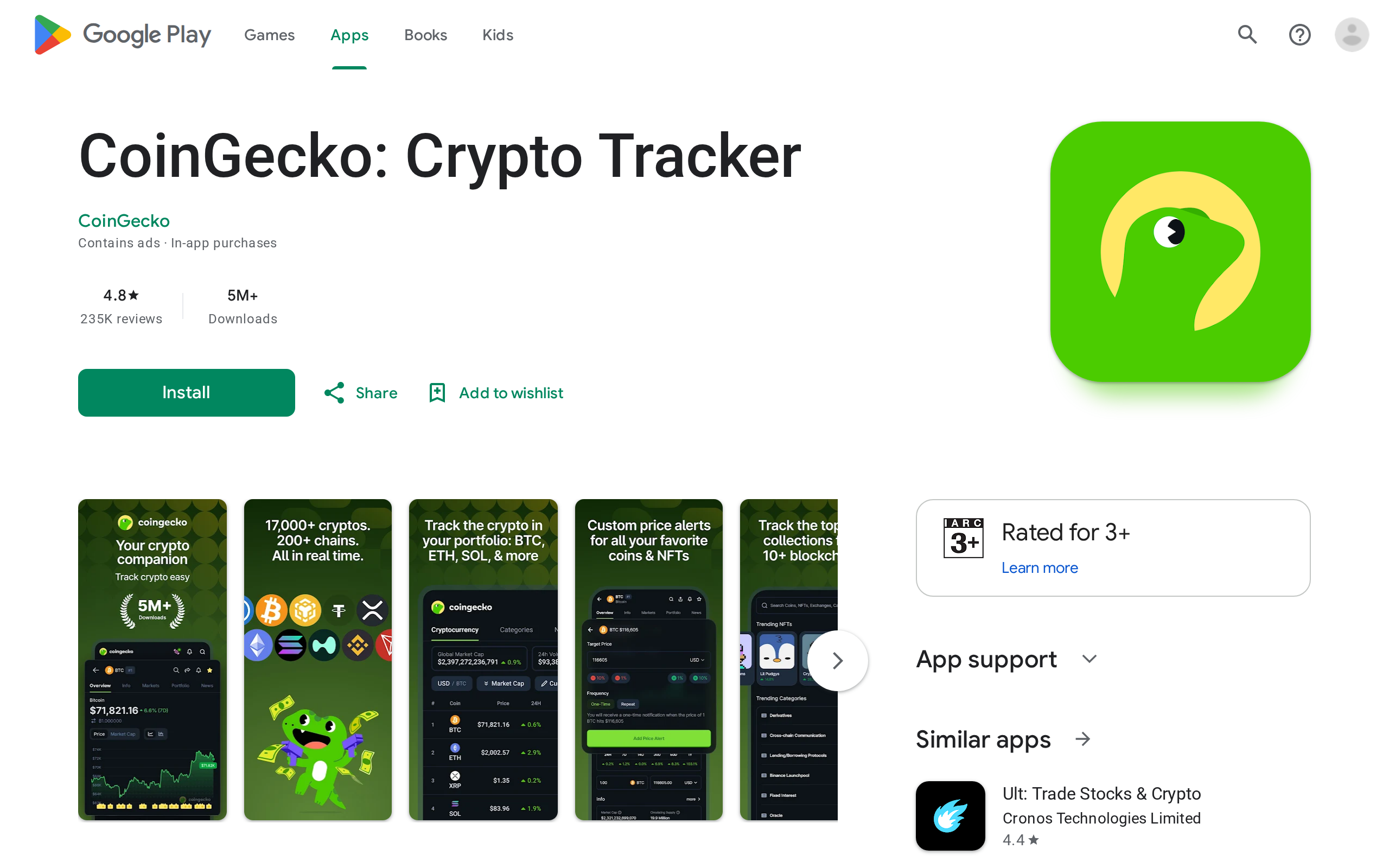
One practical note first. During our work, CoinGecko's main site returned HTTP 403 to our automated capture tool, which is a bot-protection setting and not an outage. The screenshots in this review therefore come from its documentation, support, GeckoTerminal and app-store pages, which were reachable.
Coverage is the real product
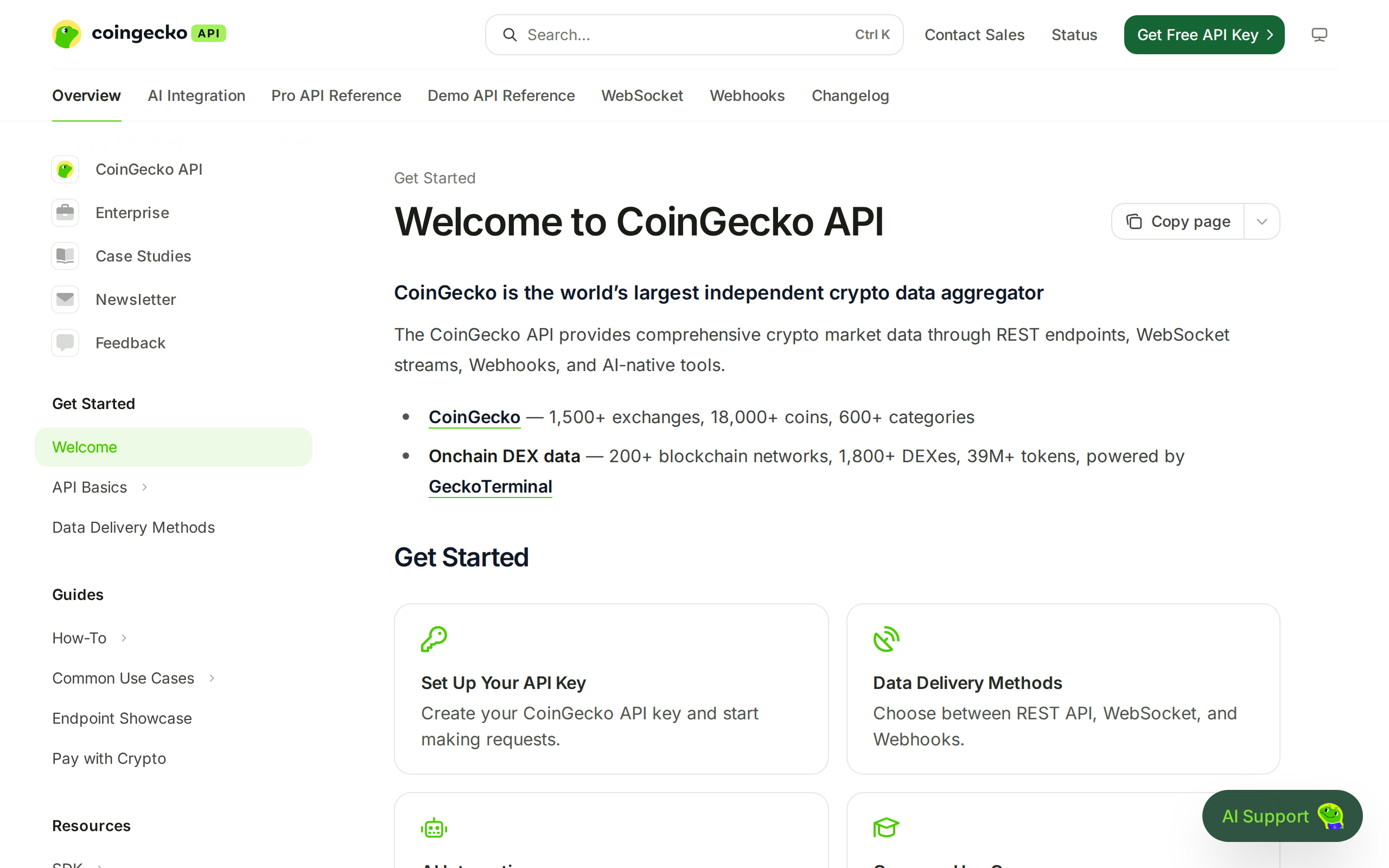
CoinGecko's API documentation states its scope in one line: 1,500+ exchanges, 18,000+ coins and 600+ categories, plus on-chain DEX data across 200+ networks and 1,800+ DEXes. For a reader trying to check an obscure token, that breadth matters more than a clean interface. If a coin exists on a real exchange or a DEX pool, CoinGecko usually lists it.
Wide coverage cuts both ways. New and small tokens can show prices from one thin pool, and a headline market cap built on a low float can mislead. The site is a reference, not a guarantee. Cross-check any figure you plan to act on against the exchange itself.
How it tries to keep bad data out
Two mechanisms matter. For prices, CoinGecko has described using outlier filters and volume-weighted averages across venues so a single odd quote does not move the global figure. We could not check that against raw data ourselves, and we state it as the company's method, not our finding.
For exchanges, it uses a Trust Score. The idea dates to 2019, when CoinDesk covered the launch as a way to separate real volume from fake. CoinGecko's support page on the Basilisk update shows the score has been reworked around components such as liquidity, cybersecurity, regulation, incident history and proof of reserves.
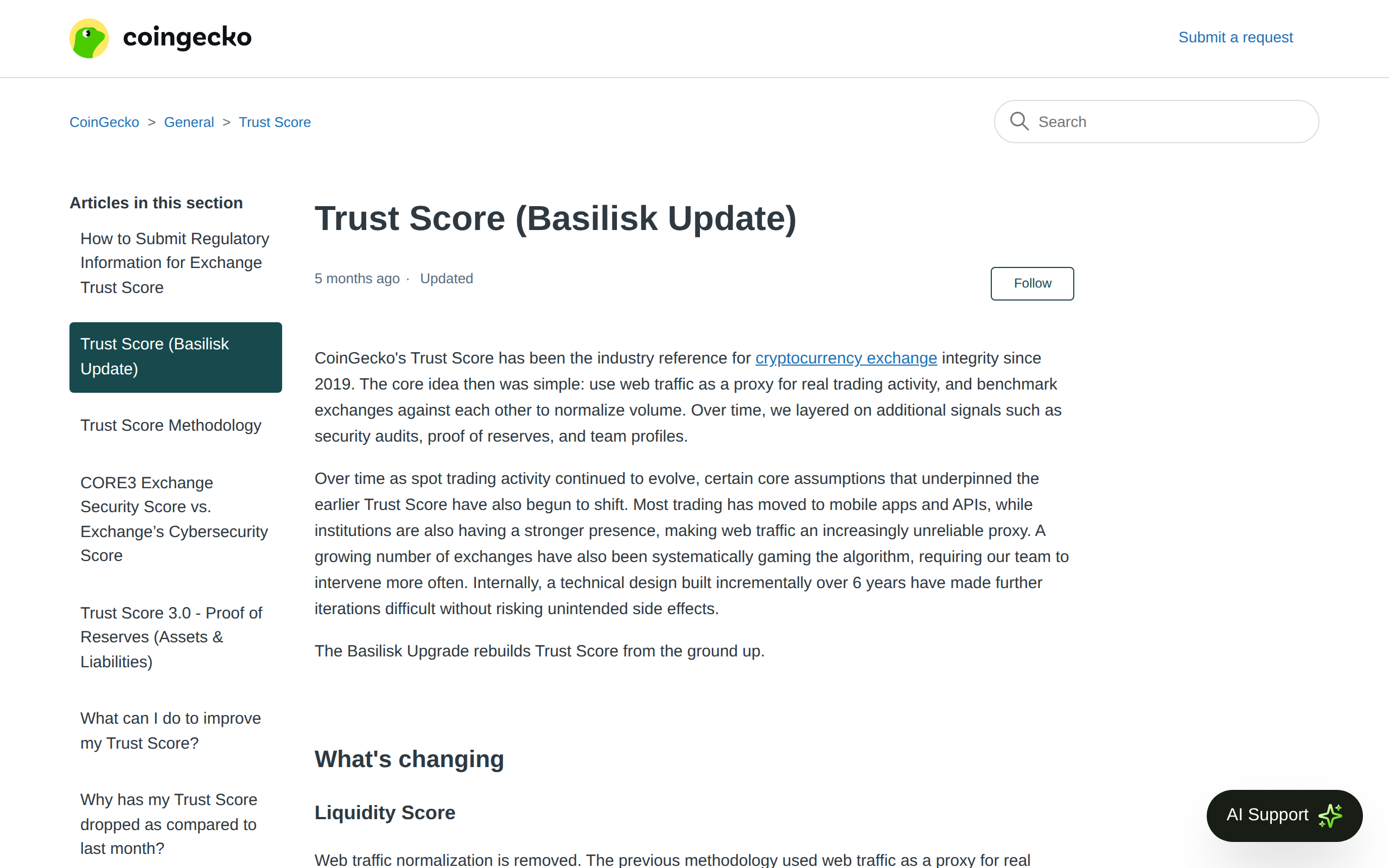
That rework is both a strength and a warning. A method that changes shows the team is paying attention, since web traffic became a poor proxy as trading moved to apps and APIs. It also means the exchange rankings you saw two years ago are not comparable to today's. Use the Trust Score as one input next to licences, proof of reserves and your own tests.
DEX data is a quiet strength
GeckoTerminal, CoinGecko's on-chain tracker, lists trending pools, new pools and top gainers across chains. For a reader vetting a token that has no centralized listing, it is the fastest way to see where the liquidity sits.
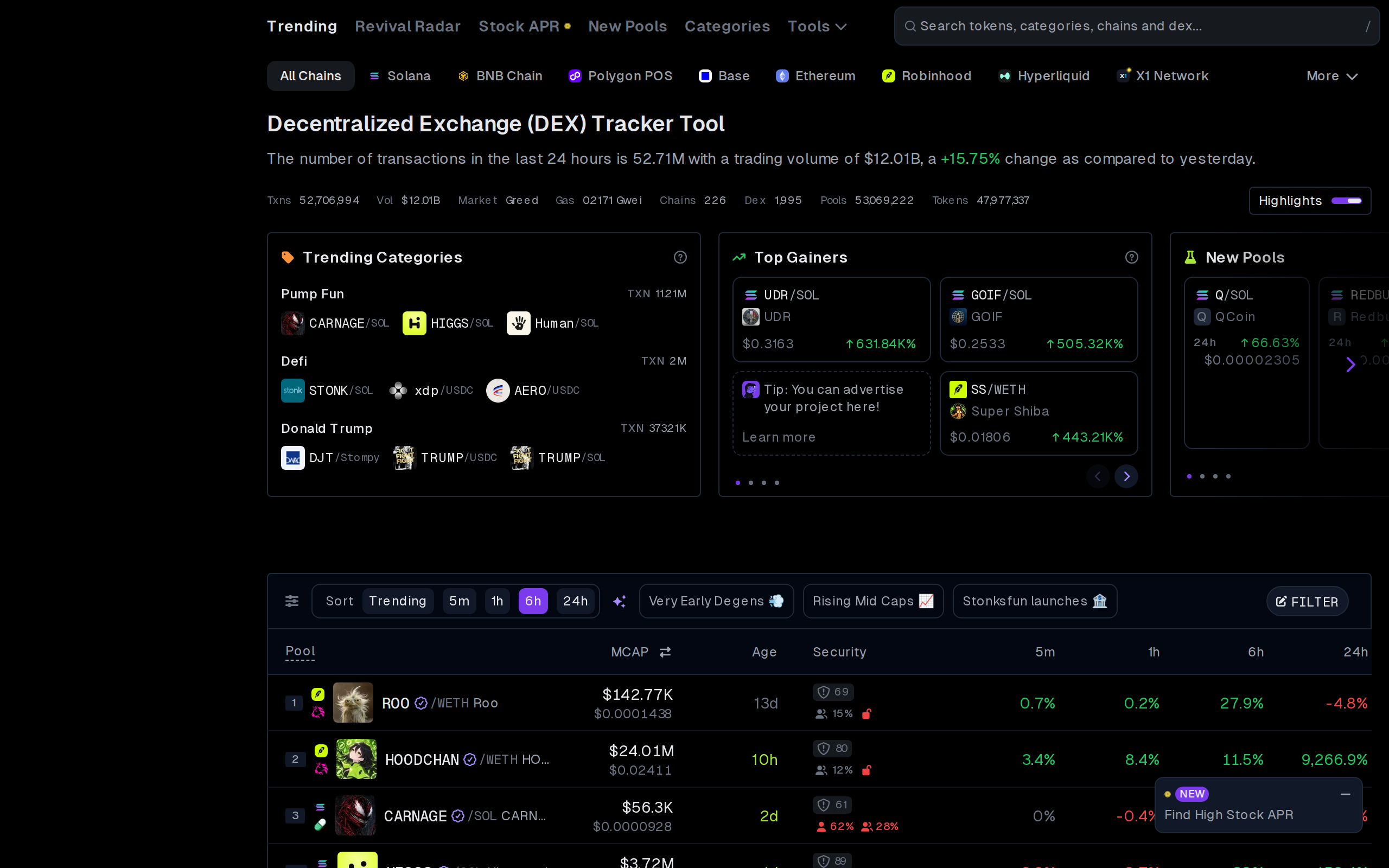
New pools carry a hazard no data site can remove: many are scams. A pool appearing on GeckoTerminal says nothing about whether it is safe.
Premium: what you actually get
Premium is a platform subscription, separate from the API. Pricing reports put it from about $8.32 a month after a trial, with tracking for up to 100 wallets against 2 free, unlimited manual transactions, no ads and an AI chat feature. We could not load the pricing page ourselves, so confirm the current price on the site.
Who benefits? A holder with many wallets who wants one portfolio view. Who does not? Someone who only checks prices, since the data itself is the same free data. We would pair it with a dedicated tax tool, not treat it as one.
The API: free is generous, paid is for builders
The free Demo plan gives 100 calls a minute and 10,000 a month, which suits a hobby script or a spreadsheet. Third-party pricing summaries list Basic at about $35 a month for 100,000 calls and Analyst at about $129 for 500,000, with higher plans well above that. Faster refresh and real-time data sit in the expensive tiers. If you are not building a product, you do not need them.
Who should use it
Use CoinGecko as your default price reference, your first stop for exchange listings and your DEX scout. Pay for Premium only if you track many wallets. Pay for the API only if you ship software. None of this is a view on any coin.
Verdict
CoinGecko earns a high score for free coverage and method transparency. It loses a little for a Trust Score that is still evolving, for thin small-cap data and for paid tiers that mostly sell convenience.
Specifications
- Coins tracked
- 18,000+ (per CoinGecko API docs)
- Exchanges tracked
- 1,500+
- On-chain DEX data
- 200+ networks, 1,800+ DEXes via GeckoTerminal
- Free website
- Prices, charts, exchange pages, 2 wallets tracked
- Premium
- From about $8.32 a month; 100 wallets, no ads
- Demo API
- Free; 100 calls/min, 10,000 calls/month
- Paid API
- Basic about $35/mo; Analyst about $129/mo
- Mobile app
- iOS and Android
As published by CoinGecko when we tested it.