Coldcard Q Review: Superb Air-Gapped Hardware, Undone by a Seed-Generation Flaw
The Coldcard Q has the best keyboard and QR signing of any Bitcoin-only wallet we tested. But a firmware flaw weakened the seeds it generated, and about a hundred million dollars was drained in July 2026.
The verdict
The Q's hardware is the most considered Bitcoin-only design we have handled, but its firmware silently weakened seed generation for years, and attackers drained well over $100 million in July 2026. Fixed firmware exists (1.5.3Q), and new seeds made on it are sound. Anyone who generated a Q seed earlier must migrate, and trust now rests on the fix.
Best for Experienced Bitcoin-only users who verify firmware and use multisig
Pros
- QWERTY keyboard and QR scanner make fully air-gapped signing practical
- Dual secure elements, duress and brick PINs, and Seed XOR for hardened setups
- Powered by three AAA cells or USB-C, with no wireless radios
- Multisig, Key Teleport and encrypted backups for serious self-custody
Cons
- A firmware fallback cut seed entropy to about 72 bits on the Q until fixed
- Updating firmware does not repair a seed created before the fix, so you must migrate
- Coinkite first said only the Mk3 was affected, which was later shown to be wrong
- At $319 it costs more than the Trezor Safe 7 and offers Bitcoin only
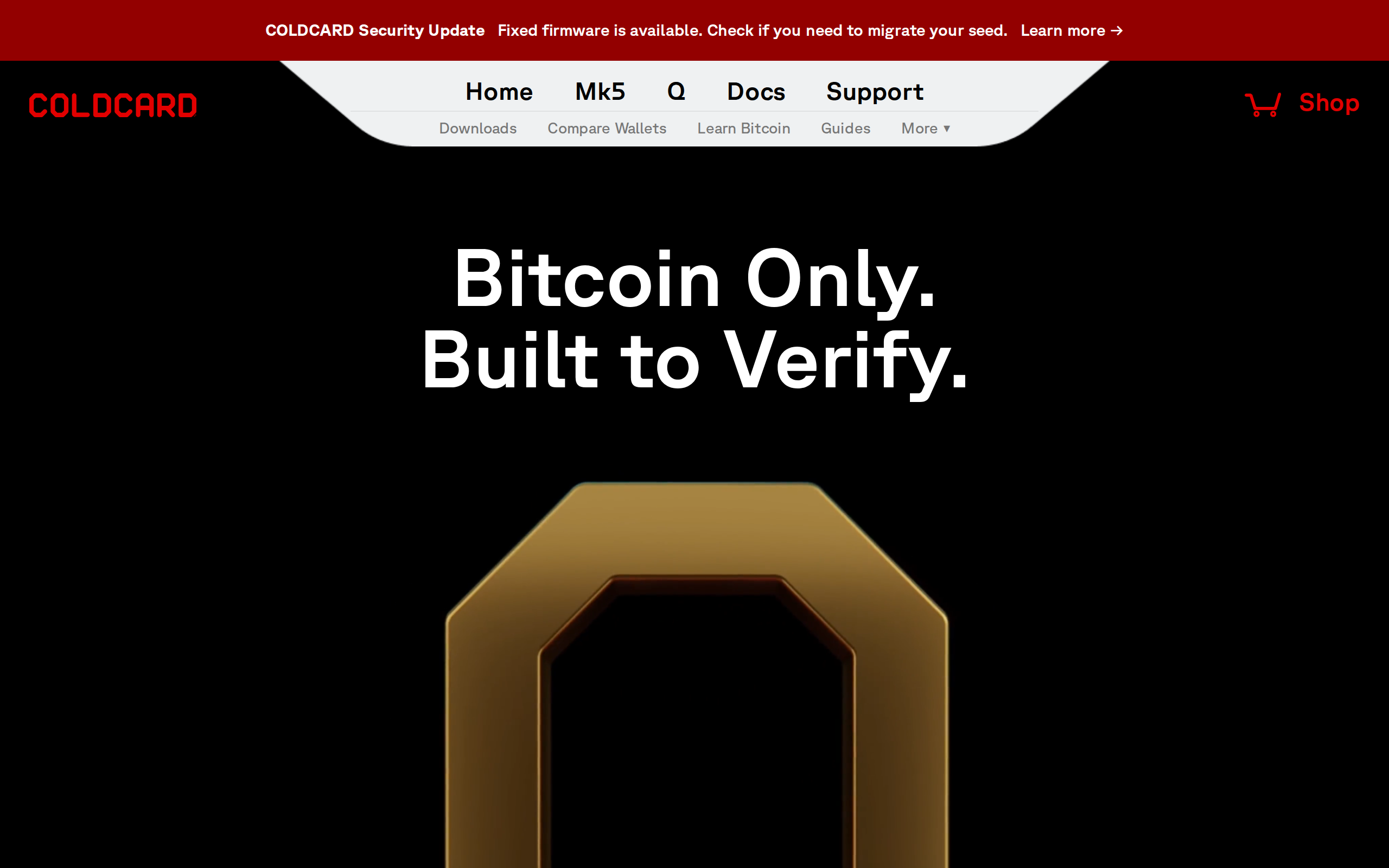
Read this before the specs: on July 30, 2026, attackers began draining bitcoin from Coldcard seeds, and the Q was on the list of affected models. The cause was firmware that skipped the hardware random number generator and used a weaker software fallback. Estimates of the loss run from about $85 million to more than $130 million. Coinkite has since shipped fixed firmware, and a Q set up on it today makes sound seeds. Everything else in this review is about a device whose design we admire and whose maker we can no longer take on trust.
What went wrong, in plain terms
The facts come from the maker's own status page, from Block's engineering write-up and from Protos' timeline. A build error in firmware 4.0.1, released in March 2021, routed seed generation to a predictable software generator. Attackers then regenerated keys offline. Halborn puts the Q's effective entropy at roughly 72 bits instead of 128.
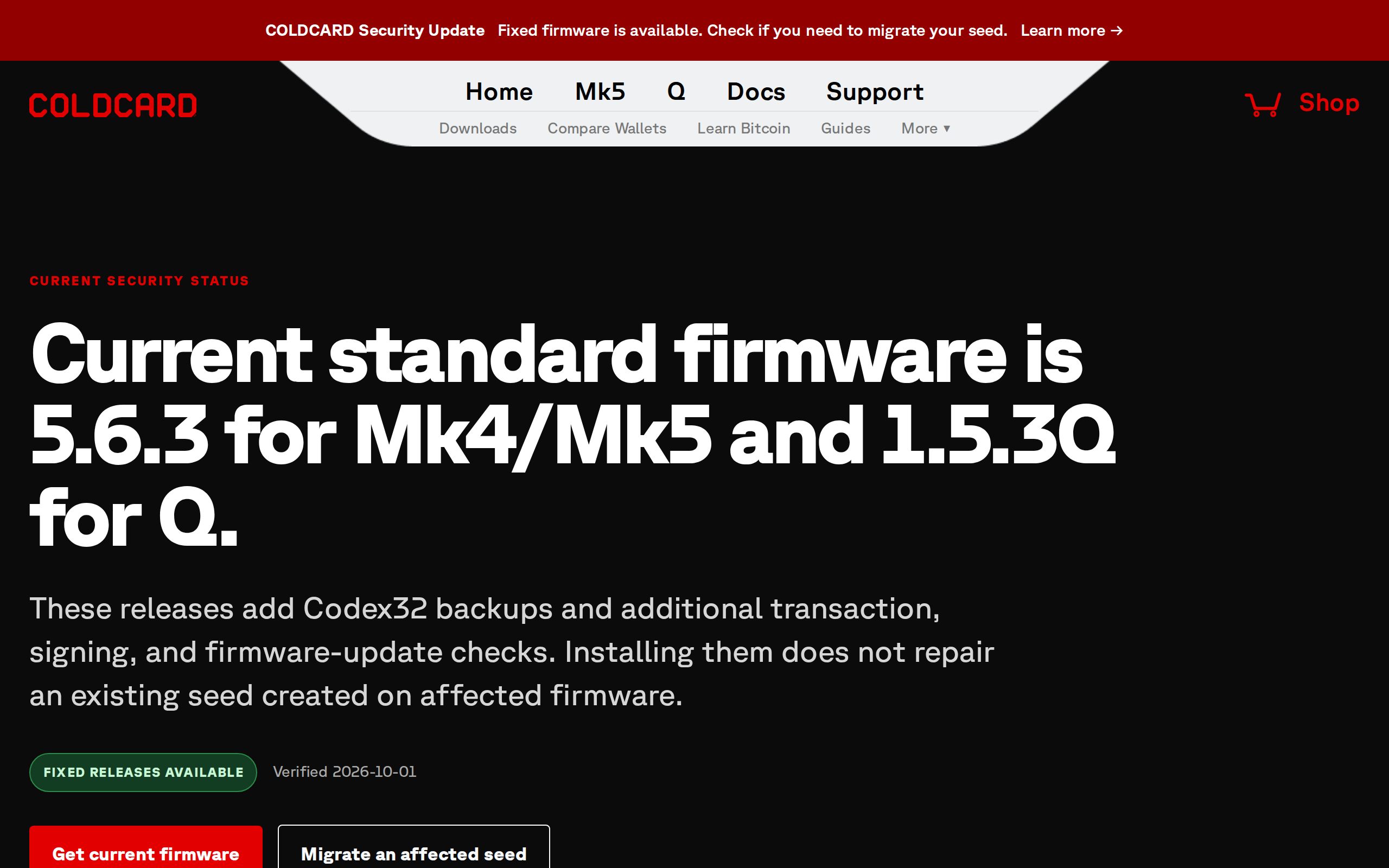
Three details matter to a buyer. First, the device itself was not hacked: the weakness was in how seeds were born. Second, updating does not help a seed that already exists, and Coinkite says so plainly. Third, Protos reports that the company first described only the Mk3 as vulnerable, which proved wrong. A slow and partial first answer is a data point about the maker, not only about the code.
What to do if you already own one
Install current firmware before you set up any seed. The downloads page shows the Q's current release, 1.5.3Q, labelled as a fixed release. If your Q seed predates the fix, Coinkite's guidance is to migrate to a new seed made on fixed firmware, and it adds that seeds made from at least 50 real dice rolls may not need it. A long, strong passphrase and dice-based entropy bypass the faulty generator, per Block's analysis.
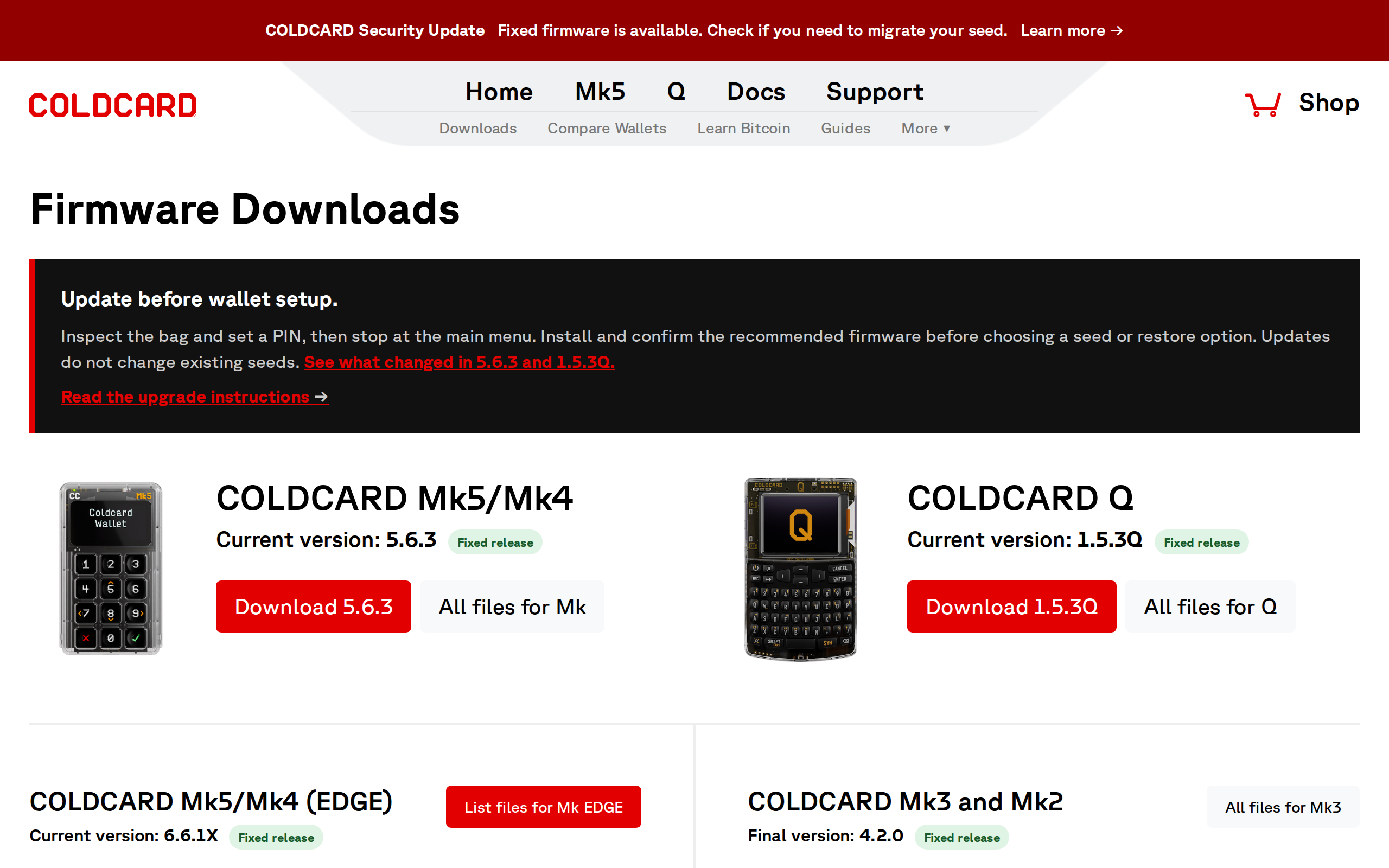
This is a moment to check your own situation with the maker's guide or a knowledgeable friend, not to act on a review.
The hardware is still the best argument for it
At $319 on the product page, the Q gives you a 3.2-inch screen, a full QWERTY keyboard, an LED-lit QR scanner, two microSD slots, NFC you control, and two secure elements from different vendors. It runs on three AAA cells or USB-C, so it can stay unplugged from any computer.
The keyboard sounds like a gimmick until you enter a BIP-39 passphrase on it. Typing letters beats rotating through a menu, and it makes long, strong passphrases realistic, which is exactly the habit that would have protected many owners here. Set-up follows a clear sequence in the official guide.
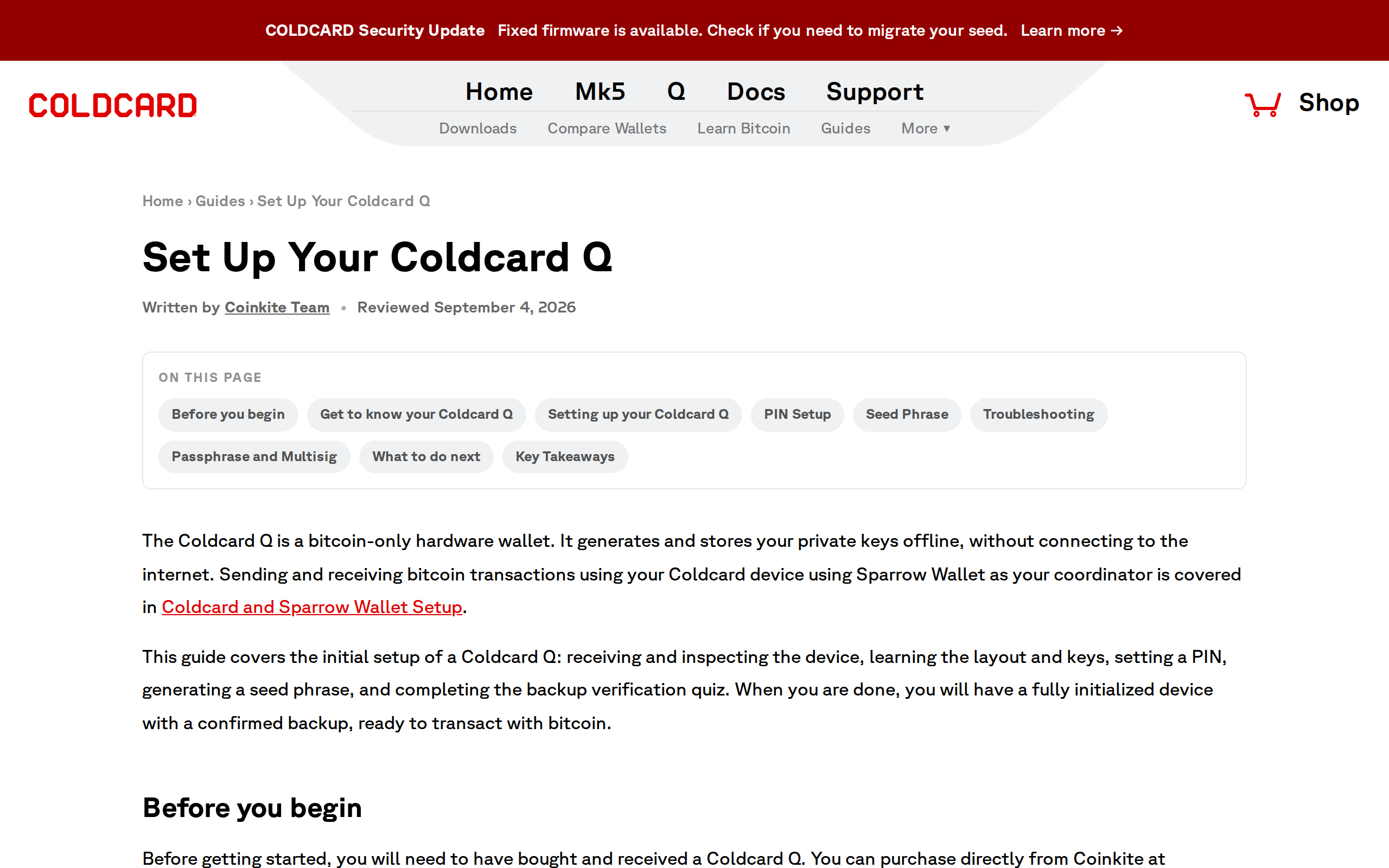
The air gap is real. QR codes or microSD move transactions in and out with no cable to a host, which suits Sparrow or Nunchuk workflows. Trick PINs, a brick PIN, Seed XOR and Key Teleport go far beyond what mainstream wallets offer.
The costs of that design are ordinary ones. The Q is bulky next to a pocket-sized Ledger or Trezor, one hands-on reviewer found the screen dim at full brightness, and advanced features such as PSBT handling and duress PINs are easy to misconfigure. You also need to carry spare AAA batteries. None of that is a flaw. It is the price of a device meant for people who read the manual.
Multisig is where the Q makes sense
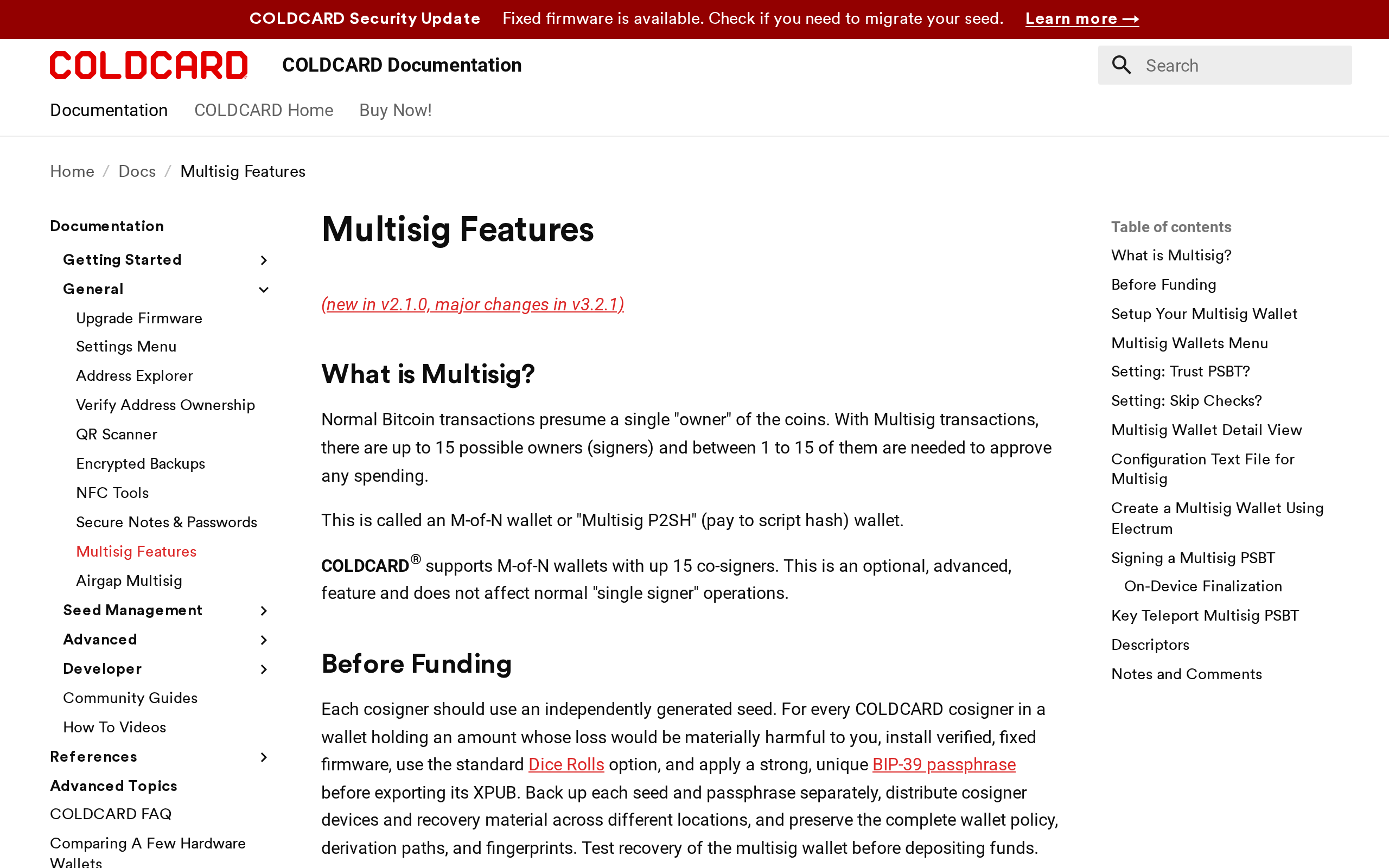
If you ever use a Q again, we would use it as one key among several. The multisig documentation explains how a quorum limits the damage when one signer fails, and the RNG episode is the sort of failure multisig is built to survive: a second device from another maker does not share the flaw.
Against the Trezor Safe 7
Coinkite's comparison page argues that its QR and microSD signing is more isolated than Trezor's USB or Bluetooth. That is a fair engineering point, and a competitor's claim. Our Trezor Safe 7 review covers the other side: lower price at $249, multiple coins and open source licensing. One more caution: critics note that Coldcard's firmware moved from GPLv3 to a licence you can read but not freely fork.
Verdict
Buy a Q only if you are an experienced Bitcoin-only user, you are willing to verify firmware signatures, and you plan to use it in multisig or with a strong passphrase. For a first hardware wallet, skip it: the learning curve is steep, the price is high, and there are easier devices without this record. We rate the Q 5.2, and nothing in this review is personal financial advice.
Specifications
- Price
- $319 (Coinkite)
- Display
- 3.2-inch, 320x240 LCD
- Input
- Full QWERTY keyboard, QR scanner with LED
- Secure elements
- Microchip ATECC608 and Maxim DS28C36B
- Power
- 3x AAA cells or USB-C
- Storage and links
- Two microSD slots, USB-C, NFC (user controlled)
- Fixed firmware
- 1.5.3Q is the current standard release
- Coin support
- Bitcoin only
As published by Coinkite when we tested it.