Bitget Review: Copy Trading Is the Draw, and the Fee Stack Is the Catch for Beginners
Bitget lets you copy other traders for a share of profit on top of normal fees. We looked at what that costs, what the regulatory gaps mean and why beginners should be careful with it.
The verdict
Bitget is a deep, fast-moving exchange with real strengths: 0.10% spot fees, 0.02% maker futures fees, 800+ coins and one of the biggest copy-trading rosters. For beginners, though, copy trading is mostly a way to run leveraged futures with someone else's judgement and pay for it twice. It is also unavailable in the US and holds no full licence in the EU. Use it for spot and small, capped experiments, and skip copy trading until you understand leverage.
Best for Experienced traders who want wide coin choice and futures
Pros
- Spot fees of 0.10% maker and taker, 0.08% when paid in BGB
- 800+ coins listed, with futures, Earn and tokenised stocks in one account
- Spot, futures and bot copy trading with stop-loss and daily-loss limits
- Monthly proof-of-reserves reports and a stated $300 million protection fund
Cons
- Followers pay a 10% to 20% profit share plus normal trading and funding fees
- Not available in the US and not fully licensed in the EU
- Mandatory KYC, and a leveraged-futures culture that suits losing beginners poorly
- Datawallet reports liquidation cascades and a $20M token exploit loss in 2025 to 2026
Copy trading sounds like a shortcut: pick a trader with a strong record, mirror their trades and keep the gains. Bitget has built much of its brand on that idea. The question for a beginner is not whether it works for someone, it is whether it works for you after fees, leverage and a profit share you did not see coming.
Our answer is cautious. It is a legitimate tool for people who understand futures. For beginners it is closer to a faster way to lose money.
How copy trading is priced
The overview page offers spot, futures and bot strategies. The futures page leads with "Copy long and short strategies to capitalize on high volatility", which is accurate and also the warning label: you are copying leveraged positions.
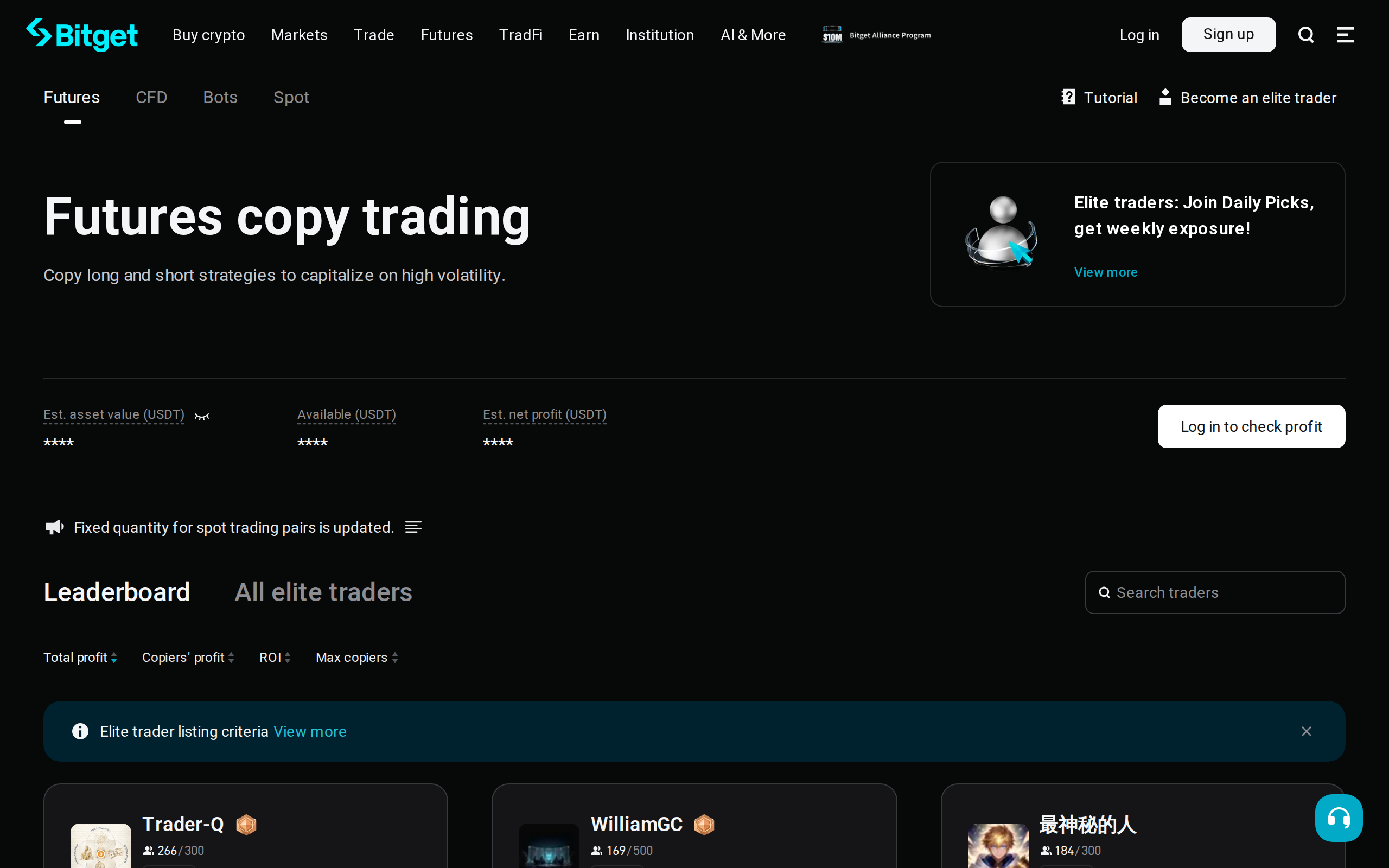
The costs are in Bitget's fee FAQ. Followers pay a profit share to the lead trader, typically 10% to 20% of realised profit, set by each trader and charged only when a copied trade closes in profit. On top of that you pay standard trading fees, and on futures, funding fees.
The structure is lopsided. A lead trader keeps a cut of the wins and loses nothing on the losses, which are yours. A strategy that makes ten small gains and one large loss can still leave the follower down while the leader has been paid ten times.
Bitget says it has 130,000+ elite traders and 800,000 copiers, according to its own academy page. That is company marketing, and the more useful number is the one it does not publish: the share of followers who are ahead after fees.
Tools exist to limit the damage. Followers can set a stop-loss per trader, cap the amount allocated and set daily loss limits. Use all three, and start with money you can afford to see go to zero.
Questions to ask before copying anyone
A leaderboard shows past returns, and past returns say little about the next month. Before you allocate a cent, check four things on the trader's profile:
How long the record runs, and whether it spans both a rising and a falling market.
The maximum drawdown, not the best month.
The leverage in use, since 20x on a volatile pair can liquidate a position in minutes.
The profit-share rate, because 20% of every win is a heavy tax on a strategy with thin margins.
If you cannot answer all four, you are following a number, not a trader.
The ordinary exchange underneath
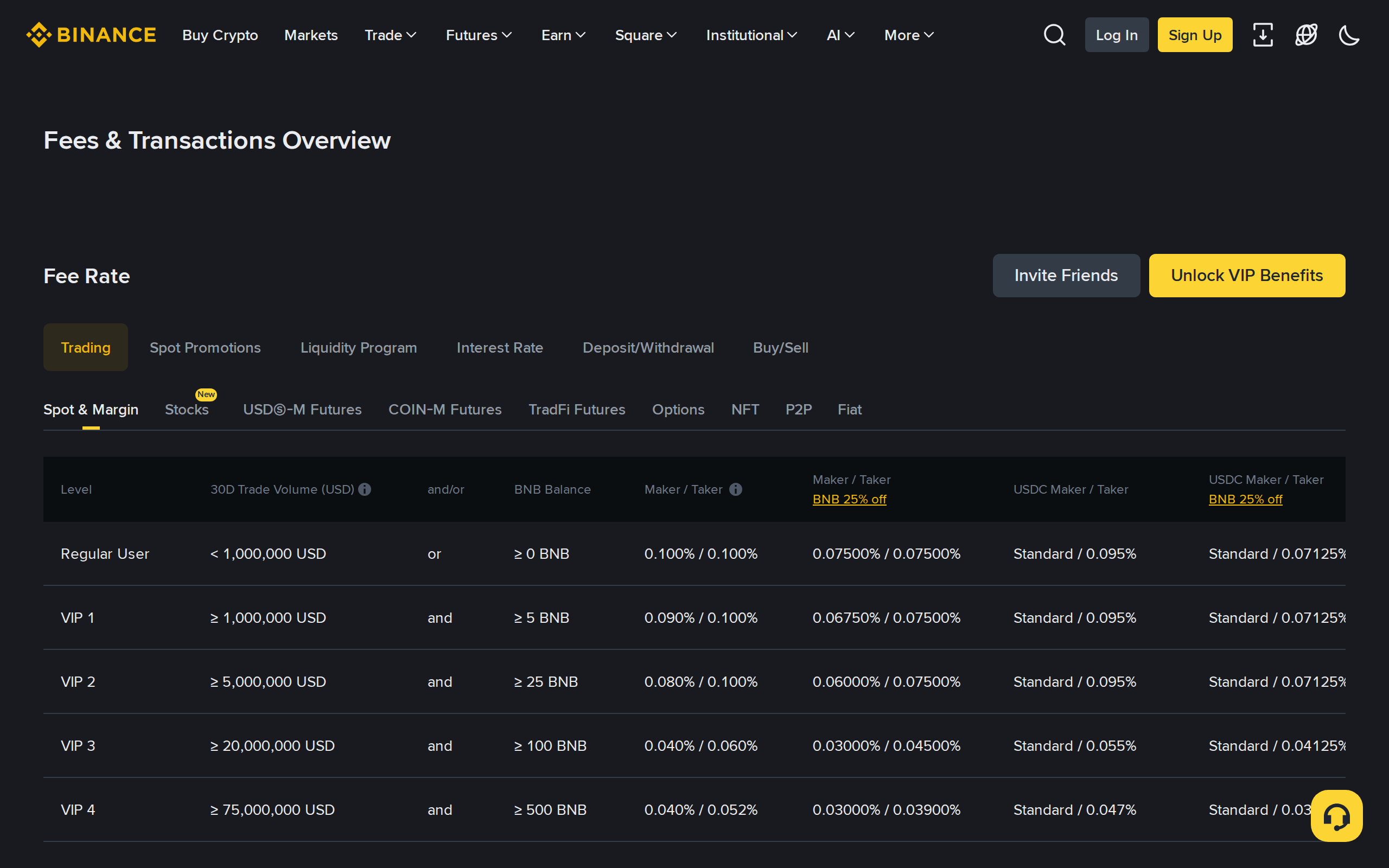
Strip copy trading away and Bitget is a conventional venue, with a competitive fee card. The fee overview is the official source.
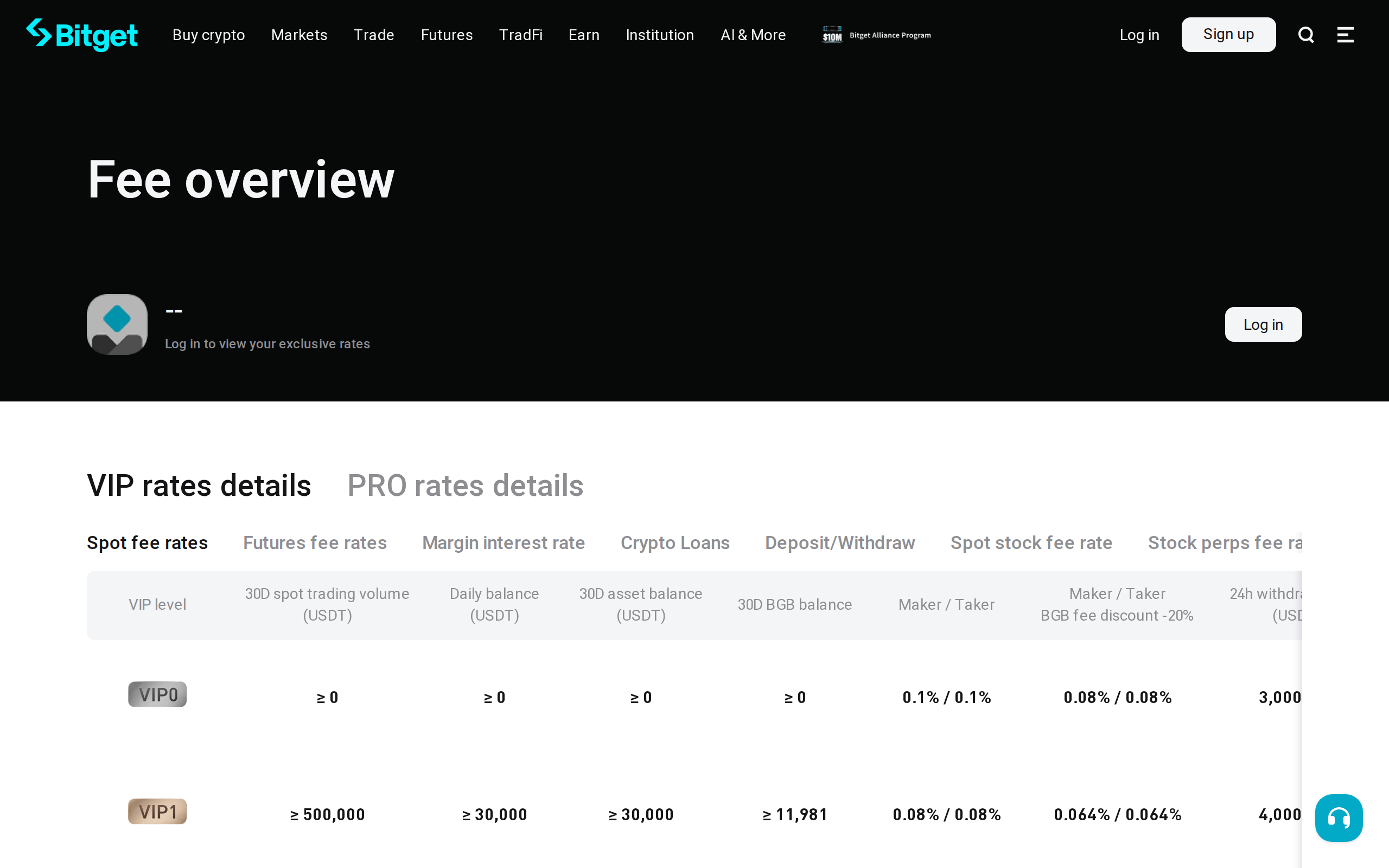
Datawallet lists spot at 0.10% maker and taker, 0.08% when you pay in BGB, and futures at 0.02% maker and 0.06% taker. Withdrawal fees it lists include roughly 1 USDT on Tron and 0.0005 BTC for Bitcoin. Those are in line with the big global venues.
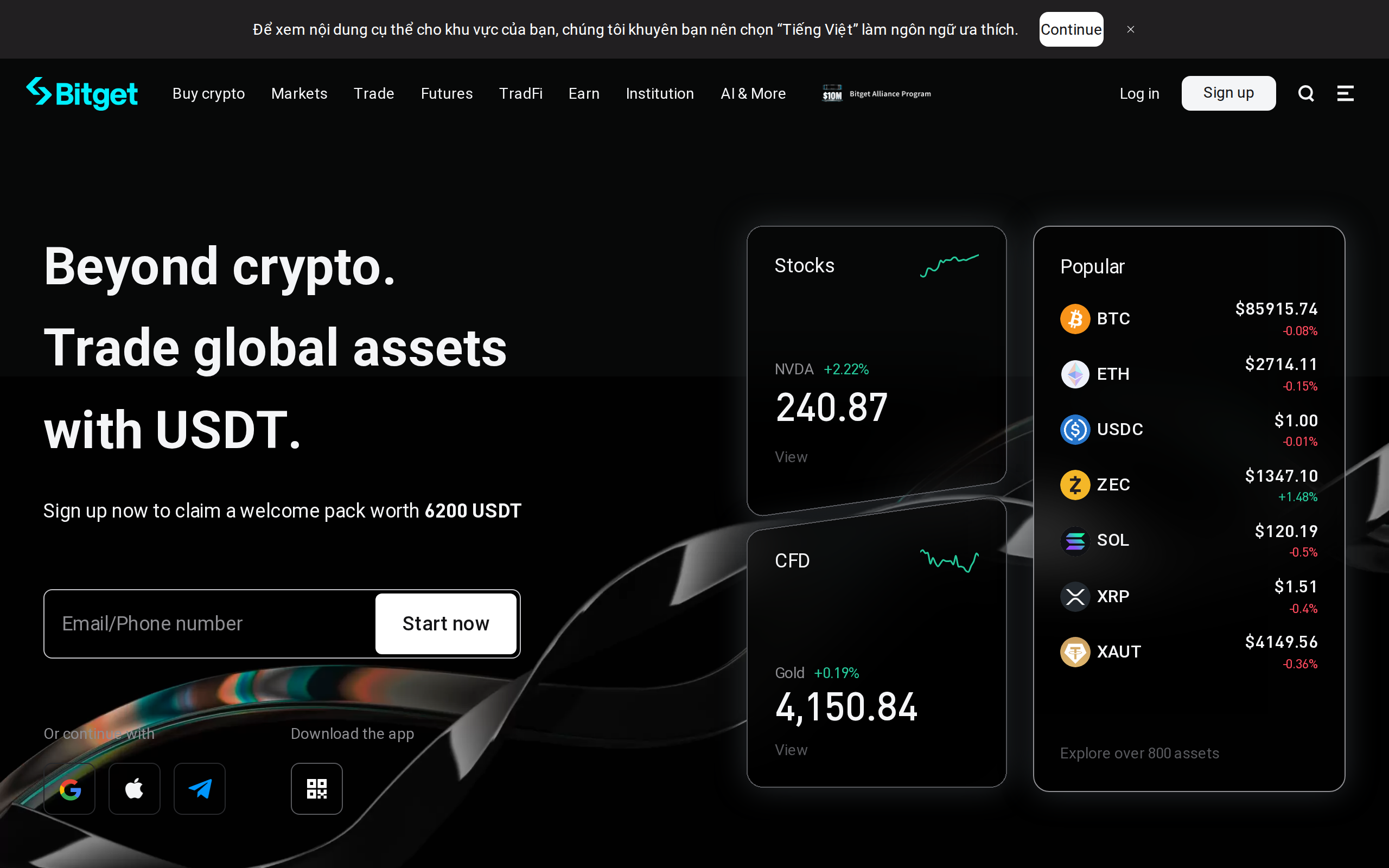
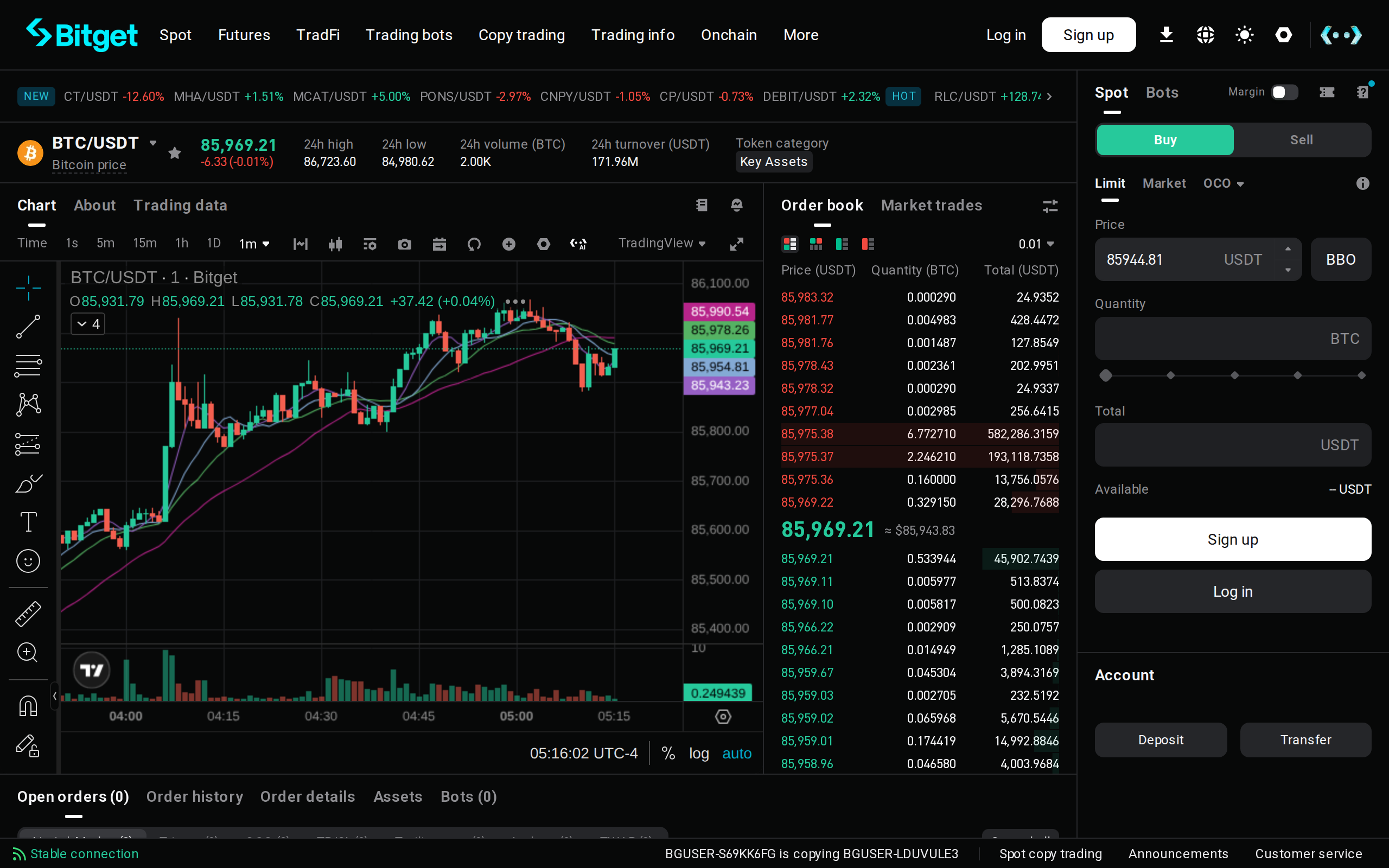
The spot market is a standard chart and order book, and the home page now pitches stocks, gold and forex traded with USDT alongside coins.
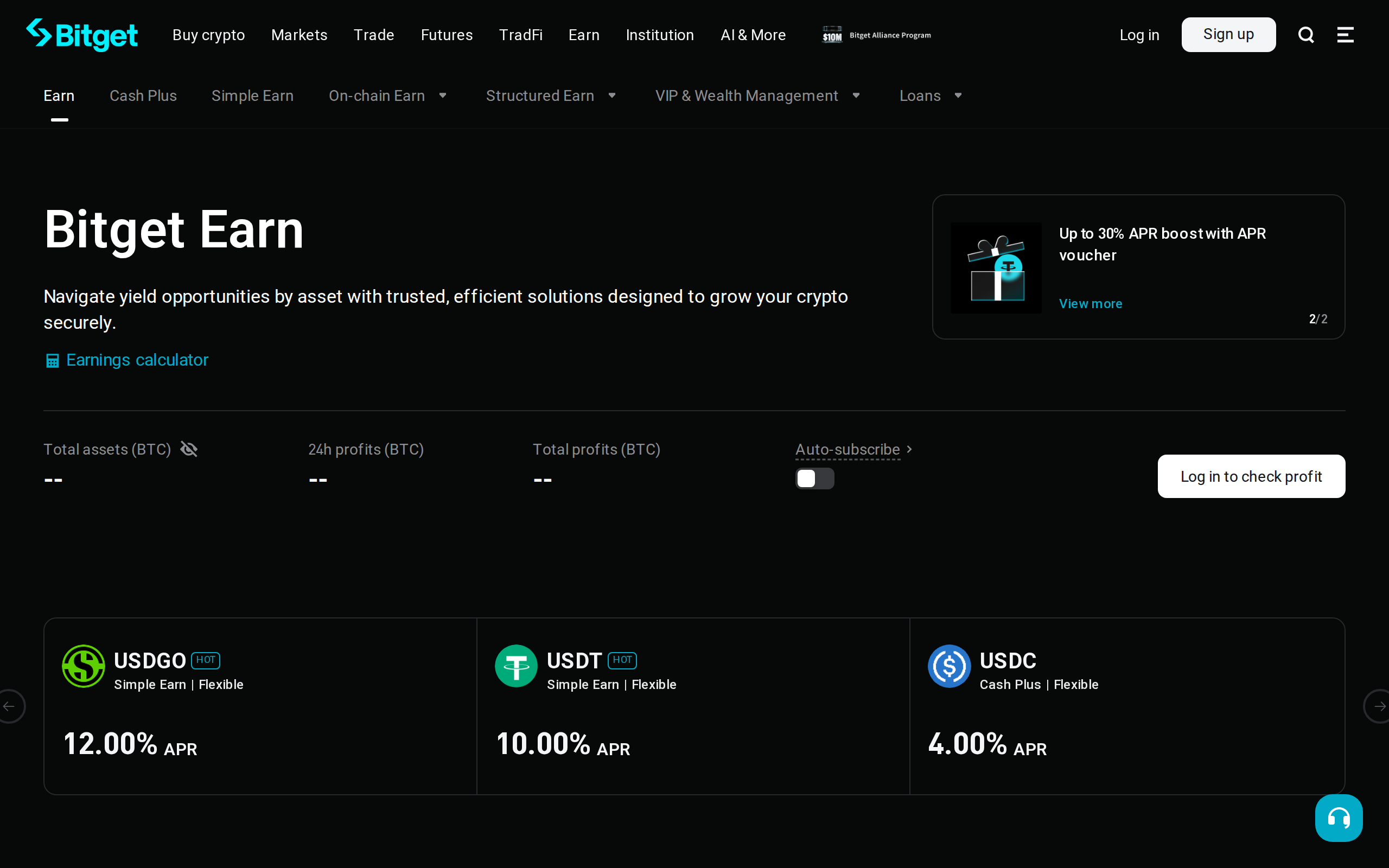
Bitget Earn adds savings-style products, with promotional lines such as "Up to 30% APR boost with APR voucher". Boosted rates are usually limited to small amounts and short periods, so read the cap before you chase one.
Regulation and risk
This is where we would slow down. Datawallet reports registrations in Australia, El Salvador, Argentina, Mexico and Switzerland, with no authorisation in the EU or US and an application under MiCA pending. It also reports exits from France and Japan in 2026, and the US is closed under the terms of use. KYC is mandatory to withdraw.
On safety, Bitget publishes monthly proof-of-reserves reports, and Datawallet lists a $300 million protection fund and a 123% combined reserve ratio in June 2026. The same review records a $20 million token exploit in April 2025 and liquidation cascades in August 2026. We treat these as single-source reports, but together they say that thin-liquidity listings are a risk on this venue.
Who should use it
Use it if you already trade futures, want 800+ coins and are comfortable with an offshore venue.
Try copy trading only with a small, capped allocation, stop-losses on and a leader you have researched for months, not days.
Skip it if you live in the US, want a fully regulated EU venue, or are new and attracted mainly by the copy-trading promise.
Verdict
A capable exchange with a feature that markets better than it pays. We rate it 6.9. Nothing here is personal advice or a forecast, and leveraged products can lose your whole stake.
Specifications
- Account
- Free; KYC level 1 needed to withdraw
- Spot fees
- 0.10% maker and taker, 0.08% with BGB
- Futures fees
- 0.02% maker, 0.06% taker
- Copy-trading cost
- 10% to 20% profit share (set by each lead trader)
- Coins
- 800+ coins, 600+ spot pairs (Datawallet)
- Protection fund
- $300 million commitment, per Datawallet
- Proof of reserves
- Monthly reports since December 2022
- Availability
- Not available in the US; not authorised in the EU
As published by Bitget when we tested it.